

I record my essays for those who prefer to listen.
You’ll find that here. ⬇️
I’ve been on a cleaning bender lately. Not the seasonal kind, and not especially virtuous. It feels more deliberate than that, more like editing than tidying, an attempt to control something, to understand what I’m leaving behind before someone else has to make sense of it.
My husband and I have reached the age where this feels practical rather than morbid. The harder it is to pretend that someday remains an abstract concept, the more often I find myself seeing our house through other people’s eyes. More specifically, through our children’s eyes as they stand here after we’re gone, holding something inexplicable and wondering why on earth we kept it. A fifty-year-old plastic nail brush from the bottom drawer of the bathroom, for instance.
I know what that feels like from the other side. That nail brush came from my mother’s drawer. Everybody needs a good nail brush, and they don’t make them like they used to. Right? RIGHT?
When my brothers and I cleared out my parents’ townhome a few years ago, I kept asking if they wanted this or that. No. No, and no. I had four days to decide, in real time, what I could afford to let go of.
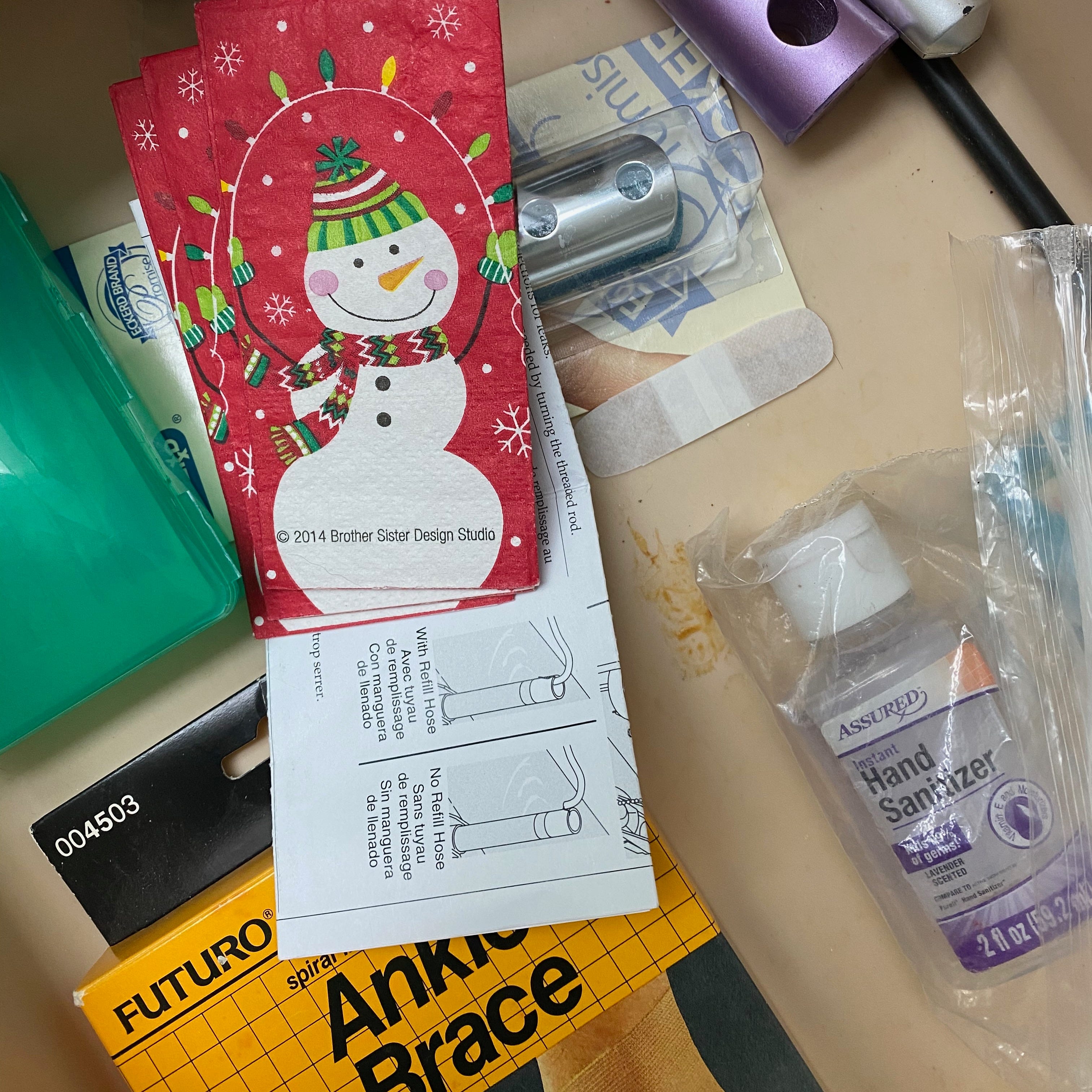
Why were there remnants of Christmas tucked into drawers all over the house? What possesses a person to keep four bottles of lemon pepper? Was the broken folding chair being saved for someone she hoped would stop visiting?
I had opinions, and no shortage of misgivings. My parents were children of the Great Depression. They kept things because they meant something, or might someday mean something, and because they had lived through a time when there was no guarantee they could replace what was lost. China, clothes, furniture, letters. So many letters.
My mother, Nancy, also kept rugs. Two of them ended up in the farm cottage where we lived for thirteen years, absorbing the wear of children, half-feral cats, a borrowed dog or two, a cockatiel, a wood stove, and more spilled drinks than I could begin to count. By the time we left, they were not fit for reuse. Nancy protested. Surely we could use them somewhere. I said no and threw them out.
I would have bet money on that being the end of it.
Those rugs had already lived one long life before us, wrapped in paper in my parents’ attic for decades after my grandparents died. We brought them down around 1995, put them back into circulation, and used them hard for more than ten years. When we moved from the farm cottage, I told myself their usefulness had run its course.
Apparently, I was wrong. Wrapped now in plastic, they turned up in our own knee wall storage during this most recent excavation. It has been fifteen years. My husband, to his credit, resisted the urge to put them back, though he did suggest they might be “good for something.” They are currently on the floor of a spare bedroom, still in their plastic, having spent as much of their existence in storage as on an actual floor, like the bridesmaids’ dresses we once believed we would wear again.
The thing is, my husband and I are not extreme about any of this. We are tidy. We try to consume consciously, not performatively. We hesitate to throw away anything that might still serve a purpose, partly because we know it does not actually disappear when we dispose of it. The plastic plant pots, the reused zipper bags, the defunct walkie-talkies are all still out there somewhere, and in here, and everywhere we are.
There is no such thing as gone.
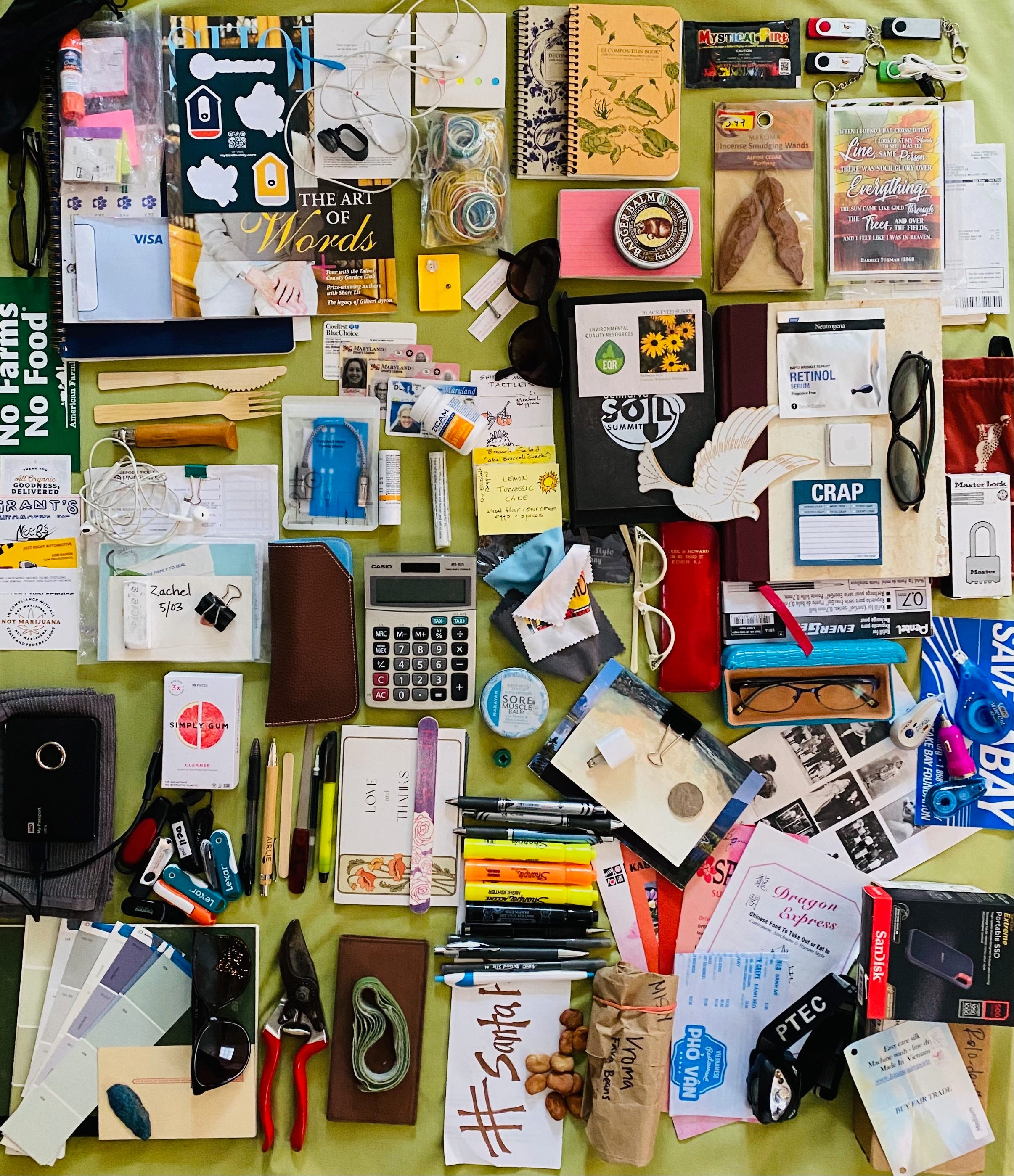
Eventually, though, the balance tips. We grit our teeth, steel ourselves against the guilt, and throw things away. There should be a better penance for the sin of consumerism. For the record, I am not Catholic.
The camcorder stays, along with the box of home videos we can only watch if we finally convert them to digital, which we keep meaning to do. We are very reasonable people, and the logic is airtight, right up until you count the canning jars. All forty-seven of them.
What if we need them someday? Which, I realize, is not so different from four bottles of lemon pepper.
It started with a single drawer and has expanded to closets and knee wall attics, their contents now spread across surfaces and floors. I have a predictable reaction to days like this. I do not want to stop. There is satisfaction in the donation pile, in the cleared spaces, in the wiped-down baseboards. There is also something else: the unexpected finds. Refills for my favorite pen. A recipe from the back of a package. The program from a friend’s memorial service with a poem I had meant to remember.
I am a storyteller. Of course I keep things. Some of it, I am beginning to understand, was always worth keeping.
And some of it is a pair of twenty-five-year-old Crocs, cracked and hideous, that still get the job done. Nancy would understand that completely, which may be its own kind of inheritance.
~Elizabeth
So. Until we can donate or dumpster them, the rugs are still in the spare bedroom. (Confession: there are more than just the two described here.) The Crocs remain in active rotation. The canning jars are not going anywhere, and I have made a certain peace with all that.
I’d love to know if you see yourself in any of this, or if your version looks completely different from mine. Are you a maximalist or a minimalist?
Drop a comment and tell me about the thing you absolutely cannot bring yourself to throw away, even though you know, you just know, that you should. Bonus points if you can explain the logic. Extra points if the logic is airtight.
If you enjoyed this, please share it with someone who has a spare bedroom full of things that are definitely still good for something. Likes, restacks, and comments all help more than you know.
This newsletter is free to read, but it isn't free to produce. If you've been enjoying Chicken Scratch and can see your way to supporting the work, I'd be grateful if you'd consider upgrading to a paid subscription—or toss something in the tip jar. No matter what, I'm glad you're here.
Afterward:
I include this section as a way to turn reflection into action, if you’re so inclined. Each week I share one small, concrete way to make a difference, because our spheres of influence are wider than we sometimes think, and even simple actions have a way of compounding.
Try this:
This week, find a few things you’re not making use of anymore and donate them. Or repurpose a formerly loved item instead of buying something new. That exchange is its own small economy of enough.
See you next week.


The story you tell beautifully here is one we've all lived. Curiously, it's not always weird odds and sods that inspire these dilemmas. While tidying the storage room last week, I found a pair of classically elegant brass candlesticks that used to sit on the Maynard family table. Nobody wants brass candlesticks anymore.
I'll be laughing all day at one of the lines from your wonderful article...."What if we need them someday"...... Our "stuff" everywhere still encircles our daily lives ...and forces me to ask that question every day....