

If you prefer to listen, you can access an audio recording, read by me, here. ⤵️
And behold
The blue planet steeped in its dream
Of reality, its calculated vision shaking with the only love.
~James Dickey
Two years ago I wrote a piece about saving ants. I was so moved by my own compassion that I used a Walt Whitman quote.
Not long after, I threw in the towel and resorted to ant bait. For those unfamiliar, the stuff works by giving ants exactly what they want—a delicious food source they carry back to share with everyone they’ve ever loved, taking out the entire colony. I place a few drops on little squares of cardboard, feel the low-grade shame of someone who knows exactly what she’s doing and does it anyway, and then go to bed. For a few days, the activity around that little puddle of poison is mosh pit bonkers, and unnerving in how it makes crystal clear that there are far more of them than us.
I’d like to report that the ants in my house are gone, but you already know the ants are not gone. They’re here in force every spring and with every significant rainfall. This year they’ve been joined by carpenter ants, which are larger and more obtrusive, lumbering through the house with the unhurried authority of inspectors who’ve already found the violations and are just taking notes. I catch their shiny, black bodies in a cup and release them outside, because I need to believe something about myself that the cardboard squares are undermining. I’m sure they’re back inside before I close the door behind me, and they’ve called in reinforcements.
Meanwhile, the neighbor—there’s a whole situation there, best left for a different moment or possibly a therapist—has bees. He’s had bees in the gable end of his house for years, right where the wall meets the roof. Each spring they wake up and get energetic, and each spring he hires someone to deal with them: a man with a can of Raid, a man with a pressure washer, and most recently a two-person crew in proper bee suits with a heavy-duty lift, who spent a full day doing whatever they did while I stayed inside feeling terrible, also not wanting to be seen lurking around my own yard at suspicious angles. I have some dignity. Not much, but some.
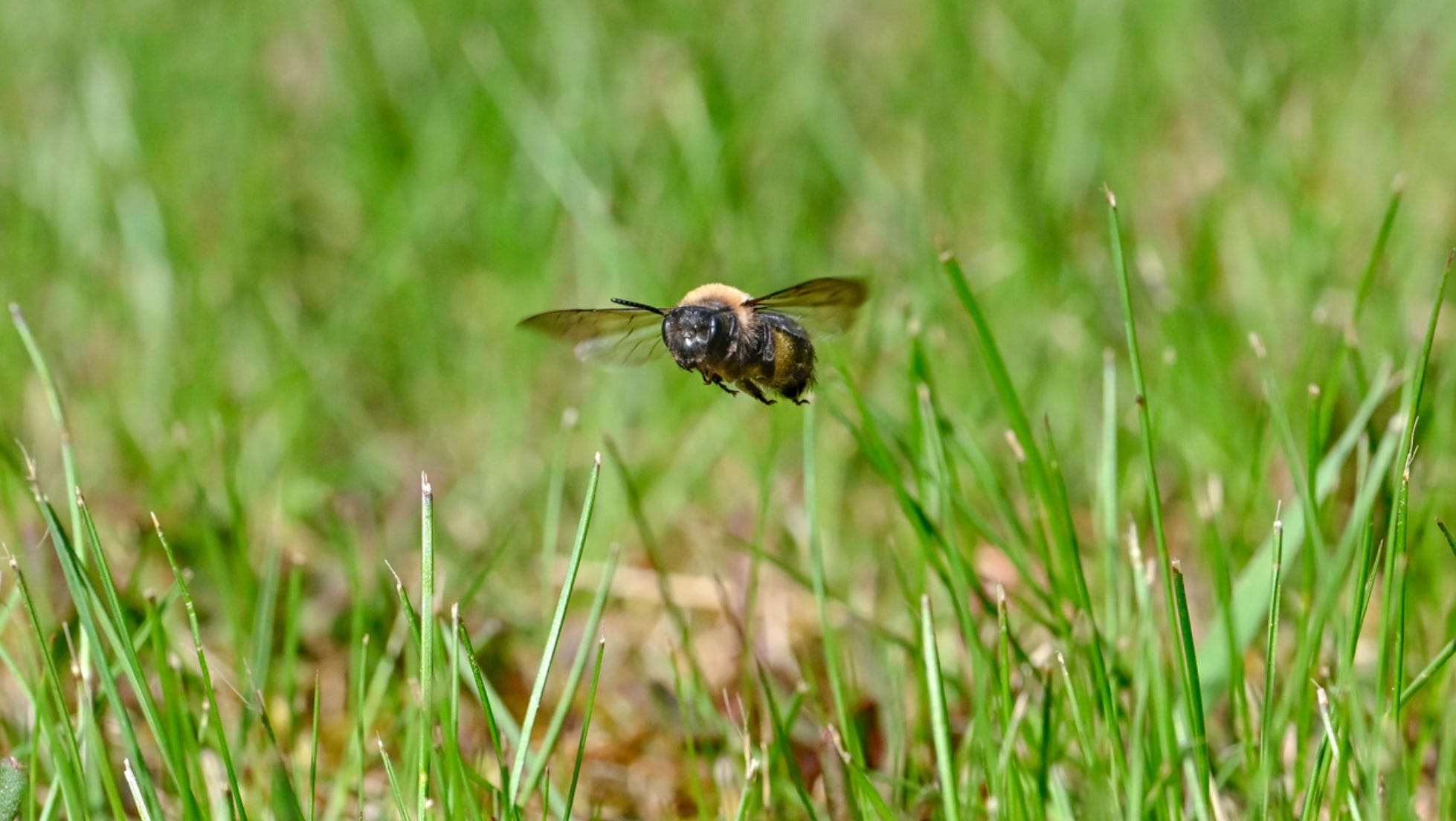
I don’t know what they found up there, but I suspect those bees have been in that wall for a very long time, which made me less surprised to read about a cemetery in Ithaca, New York, where scientists just published a study confirming one of the largest recorded aggregations of ground-nesting bees in the world: five and a half million individuals in a single plot, with evidence of the species at that site dating back to the early 1900s.
The discovery started the way the best ones do—a lab technician named Rachel Fordyce was cutting through the cemetery on her daily walk to work when she noticed the bees, gathered some into a jar, and brought them in to show her boss. Just walked in one spring morning with a jar full of bees, the way you do.
The reason the cemetery works so well as habitat, the researchers explained, is that the ground is rarely disturbed. Nobody’s inclined to go digging things up in there. The bees are important pollinators, timed to emerge with the apple bloom each April, and 75% of the world’s bee species nest in the ground the same way, in undisturbed places, doing necessary work that has nothing to do with whether we notice them or not.
Those bees were in that cemetery before anyone currently alive was born, and they’ll be going about their business long after the people currently arguing about everything have joined the people who are done arguing about anything. In fact, cemeteries are a pretty good illustration of what a life cycle actually looks like, and what our place in it is. We get a turn. We make our mark, for better or worse, and then the ground closes over us and, if we’re lucky, something useful moves in. The bees were never waiting for our permission. They’re just doing what they do best in the time they have, which, if you think about it, is the only reasonable response to being alive.

There’s a lot of talk about how humans are destroying the planet, and I believe we are. I recycle and buy less, catch and release insects, invoke Walt Whitman. I also put out ant bait. Buried in that contradiction is the assumption that everything revolves around us—that we’re the main characters and that the bees and ants are a subplot.
The damage is real. Since the winter of 1968, atmospheric carbon dioxide has risen by about a third, global temperatures have risen at an unprecedented rate, forests have been cleared, cities have sprawled, and a sea that existed for millions of years has shrunk to less than a tenth of its former size. Scientists will tell you, carefully, that human activity is responsible for somewhere between ninety and ninety-five percent of that change. The other five to ten percent is the planet doing what planets do, on a timeline that doesn’t consult us. And we didn’t start any of those processes by being the main characters. We started them by forgetting we weren’t.
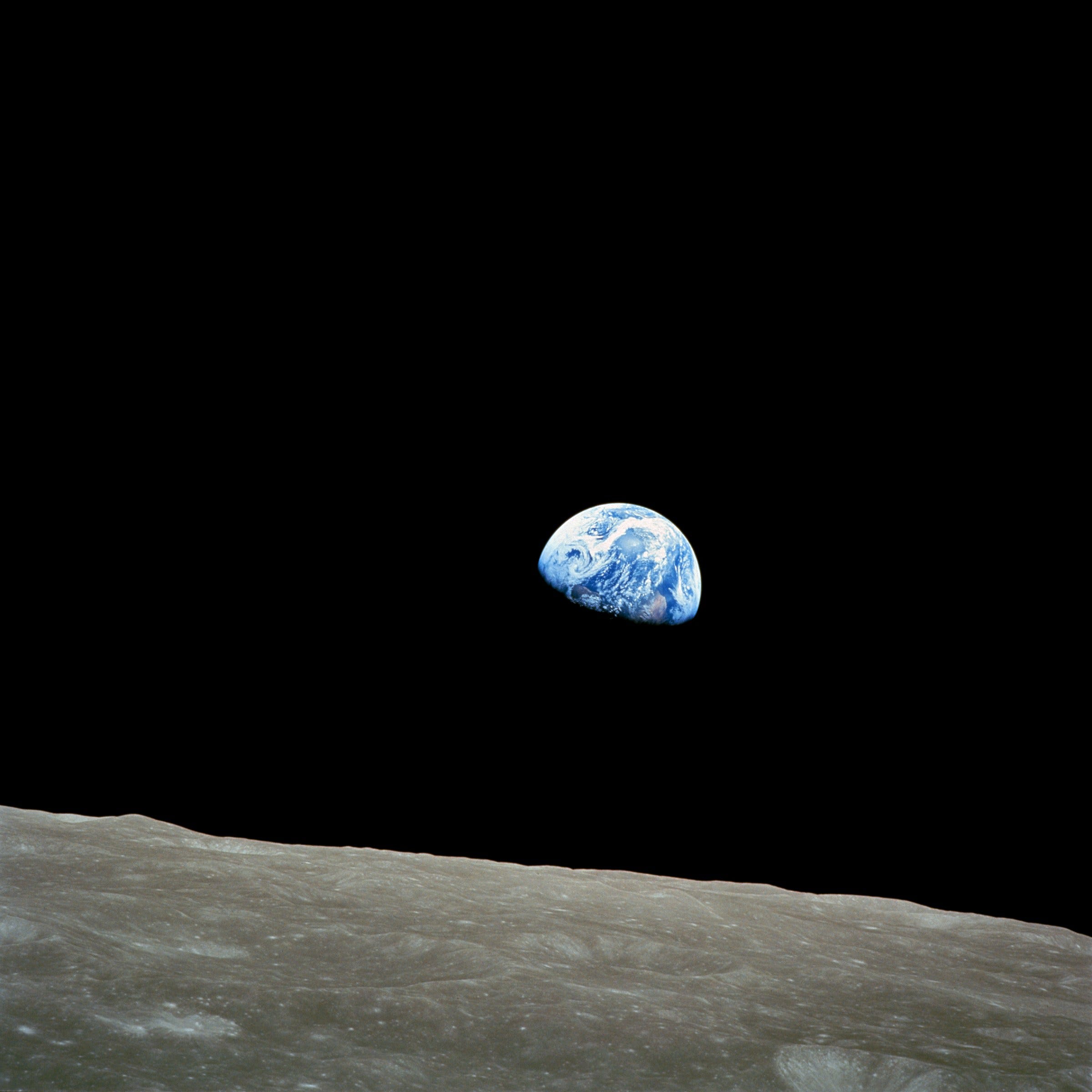
On Christmas Eve of 1968, when the crew of Apollo 8 came around the far side of the Moon, Bill Anders looked out the window and took a photograph that changed how we saw ourselves: Earth, rising over the lunar surface, a blue, cloud-swirled orb floating in darkness. Nobody had planned it in advance. It was practically an afterthought, yet it altered perceptions across the globe. Frank Borman, the mission commander, said later he couldn’t get over the fact that they’d gone all the way to the Moon and found themselves more interested in looking at the Earth. That photograph galvanized a generation, launched the environmental movement, and led directly to the creation of Earth Day, the first of which was celebrated in 1970.
This month, the Artemis II crew did it again, deliberately this time, photographing the Earth slipping below the lunar horizon. Earthset, they called it, a bookend to the original Earthrise fifty-eight years later, which is barely a breath in geological time, though it hasn’t felt that way from down here.
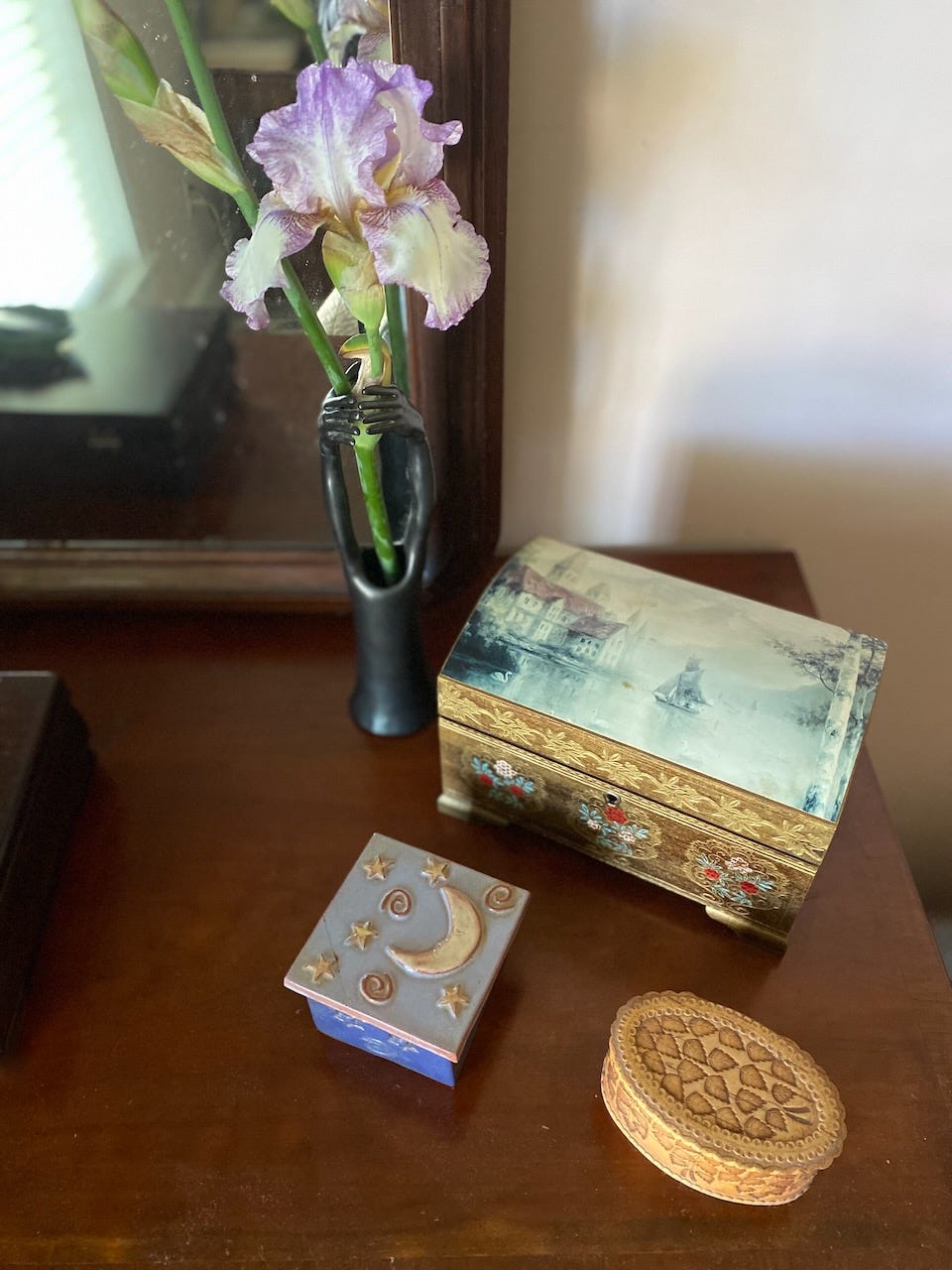
Apollo 11 launched on July 16, 1969, carrying the crew that would become the first humans to walk on the moon. I turned seven the next day, and my parents gave me a musical jewelry box that I still have and use. It plays Fly Me to the Moon, originally called In Other Words, and once you move past the celestial navigation at its beginning, it turns into a love song.
In other words, hold my hand. In other words, darling kiss me.

I eventually caught the stink bug, after it had flown back in twice, careened off my face on the second pass, invoking some of my most colorful expletives—and I carried it outside to let it go. It didn’t appear to register that anyone had done it a particular favor. It was a stink bug with places to be, and it went to them.
I stood at the door for a moment. Above me, a skyful of shimmering stars, each one as small as an ant. Somewhere in a cemetery in Ithaca, five and a half million bees had emerged, on schedule, as they have every spring for as long as anyone has been keeping records, and longer.
In other words, please be true. In other words, I love you.
~Elizabeth
Afterward:
I include this section as an invitation to turn reflection into action, when the spirit moves you. Our spheres of influence are wider than we sometimes think, and small actions have a way of compounding in ways we don't always get to see. Each week I share something concrete, something to read or watch or try or support, because that's what I can do from here, and it's probably what you can do from there too.
Try this:
My friend Sam Droege is a wildlife biologist who runs the United States Geological Survey Bee Lab with the support of vast numbers of volunteers and collaborators, and what he describes as an honorable fight worth having. The lab's future is currently uncertain in ways that would take more than this space to fully explain, but Sam is keeping people informed and will let his followers know when the moment comes to contact their representatives. In the meantime, finding him on Facebook and following along costs nothing, connects you to some of the most interesting bee science happening anywhere, and means you'll be ready when it's time to act. He’s someone you’ll appreciate knowing.
That’s it for this week’s Chicken Scratch. Now it’s your turn. Obviously, I’ve been thinking about what we owe the living world and what it asks of us, which seems like less than we think and more than we give. What about you?
Is there a creature that tests your limits?
Are there moments that remind you we’re not running this show?
I’d be thrilled if you’d share some thoughts in the comments. I mean it. Those conversations are the bees knees, and I love what I learn from you all.
If something here resonated today, please like 💚 or restack ♻️ the essay, send it to someone who might need a shift in perspective, or to someone who just really gets the stink bug situation.
Chicken Scratch is always free, a conscious decision. If you’re willing and able to help offset the hours I spend working on it, a paid subscription is how you do that, or a one-time donation. I will be grateful in the way of someone who has just successfully released a stink bug.
However you’re here, thank you for spending part of your Earth Day with me.
See you next week!
Ah, the contradictions. I hate killing creatures that are just living their lives, but mice are disease-carrying and they chew through things you need, like the wires that make the AC work. Lovely essay, moving so gracefully from ants to moon to us. (And I always ask other Elizabeths this: have you found a nice way to tell people that you don’t want to be called Liz? I haven’t. )
Another thought provoking piece, Elizabeth. Your bees reminded me that I have long believed that our neighborhood ravens have been living around here longer than some of the humans.