

If you prefer to listen, you’ll find an original audio recording here.👆


Removing the pan of bacon from the oven just long enough to flip each sizzling slice, I managed to turn only three or four before the blaring smoke alarm interrupted my efforts. My guy was quick to the rescue, flapping one of our couch pillows over his head just below the offending device.
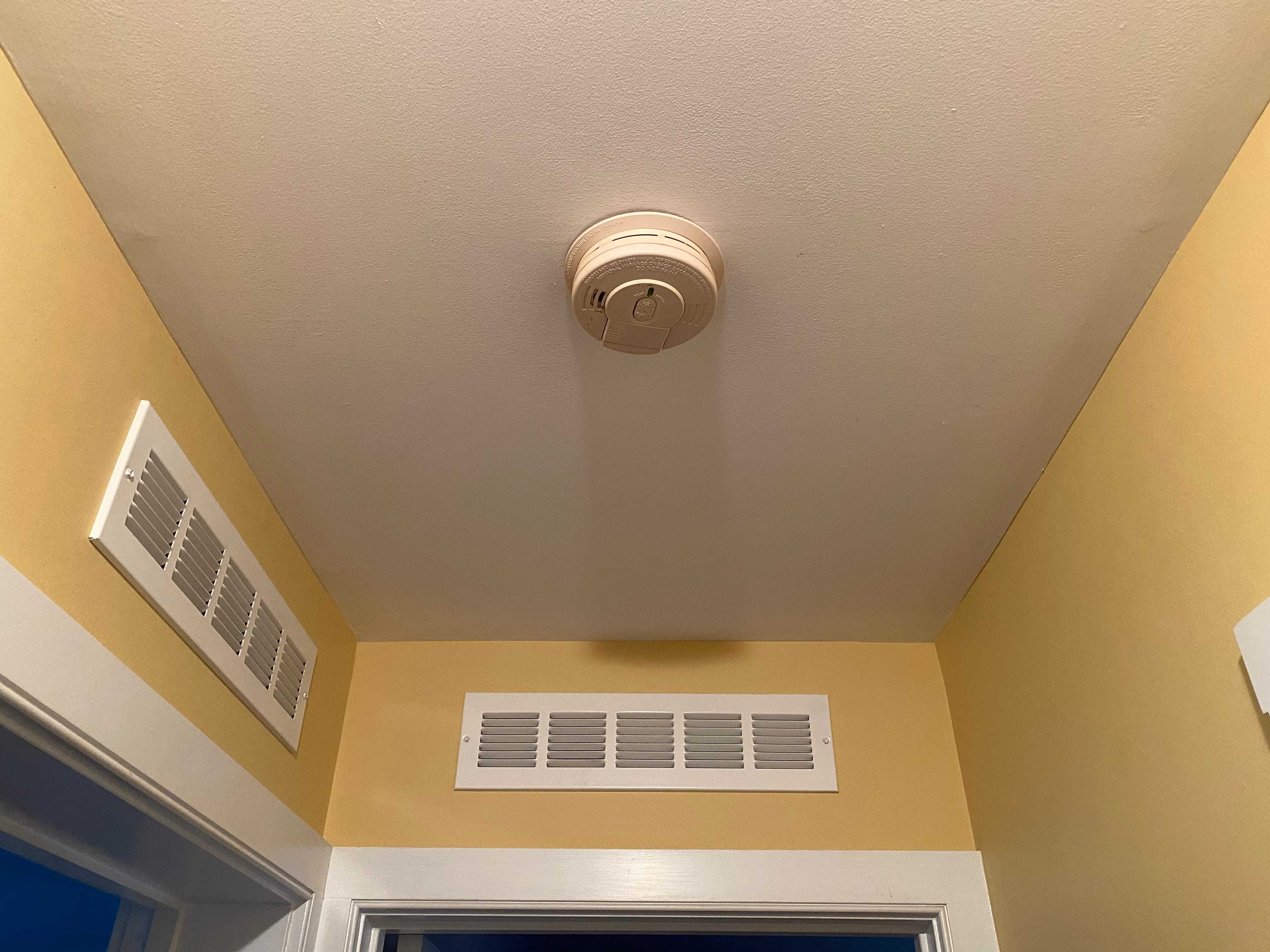
This happens several times a month. The unit is positioned near the entrance to our bedroom, which is down a short hall from the kitchen. Its hypersensitivity might be useful in the event of an actual fire, but it is annoying AF for someone who cooks as much as I do. The likelihood of it going off climbs with every degree the oven is set above 350°. Our nearest neighbors host frequent dinner parties, particularly in spring and fall, when the weather is pleasant and my windows are open. We don’t charge for the free entertainment.
The last time this happened I’d just read a fascinating article about how some dogs can smell epileptic seizure activity in strangers, even with no prior training. This has no obvious relationship to overachieving smoke alarms unless you’re inside my head, which I would not recommend. It’s a crowded place with no zoning laws and shitty public transportation. But the adventure companies are thriving in there, and on this particular excursion I went from an earsplitting signal, to sniffing canines, to thinking, “Hey, wouldn’t it be cool if we had smoke detectors for humans?” (Please tell me I’m not the only one whose brain works this way.)
Think of the possibilities! We have all sorts of sophisticated technology designed to alert us to danger, but we have yet to invent a reliable way to signal misplaced certainty, dishonesty, or the urge to mouth off at strangers.
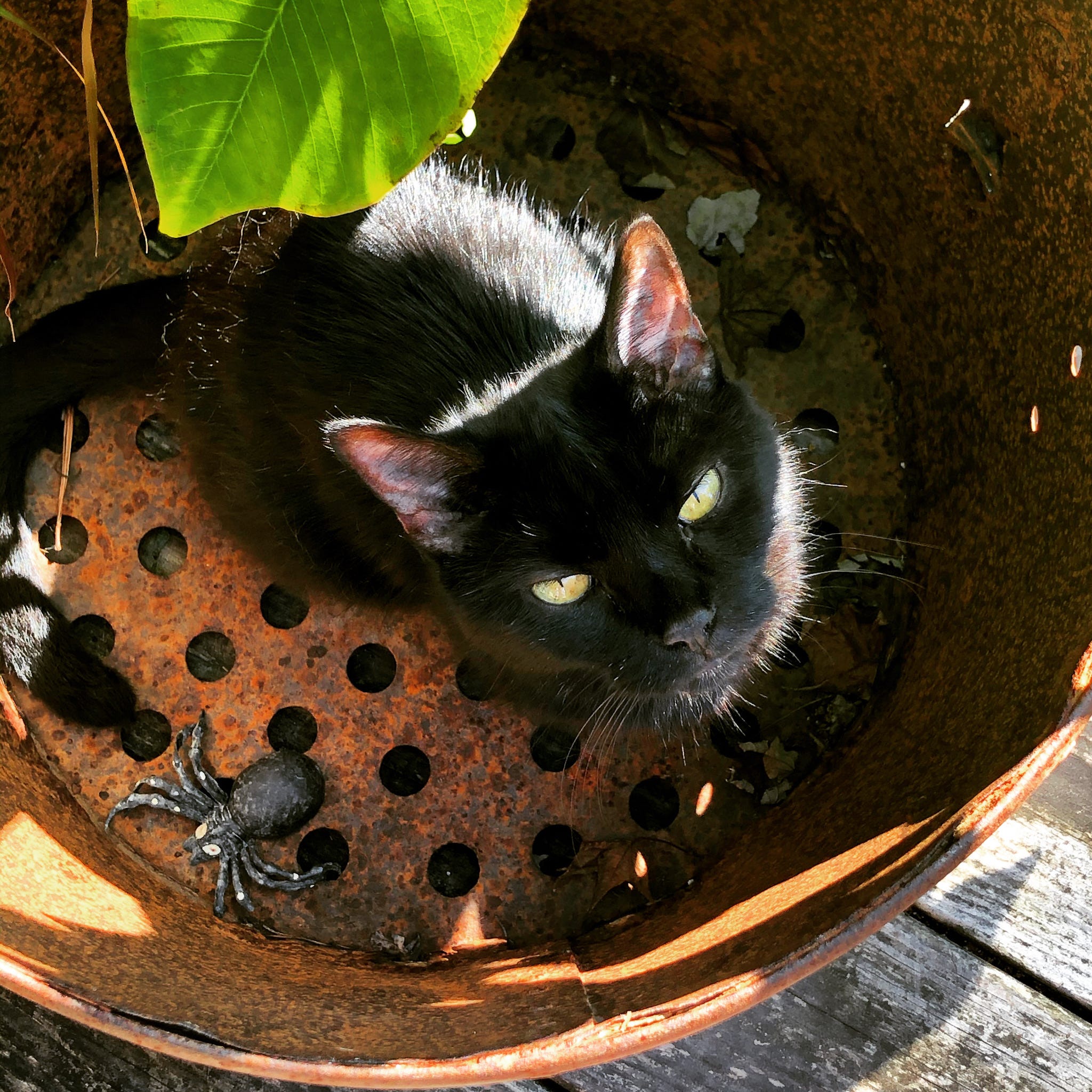
For 15 years, we shared our home with a black cat named Cricket who lacked the agility of a typical feline. This is a nice way of saying she was a klutz. She once broke a tooth launching herself off a table, and I used to worry she’d fall out of a tree. While her athletic aptitude was questionable, her culinary judgment was worse. I’d find her frothy-mouthed and shaking her head after hauling in a frog or licking a lizard.
Still, Cricket had the extraordinary ability to detect an argument. As volume and pitch grew more intense, she’d position herself at the feet of the participants and meow plaintively. If the situation continued to escalate, she’d progress to biting ankles and calves. I can’t say she prevented us from expressing anger, but she served as a kind of early warning system that helped us self-regulate. In retrospect, she might have been the most emotionally intelligent member of the household.
The science of detecting emotion isn’t new, and has, in fact, been expanding for the last decade, with support from AI. As far as I know, the research has focused on personal mood regulation, and I’m convinced the public good needs a startup, preferably one with no venture capital. Forget fitness trackers! We need certainty detectors that squeal when someone is too convinced they’re right and grudge gauges that measure how much energy is being invested in what happened three years ago. I’m not sure how we’ll work out the technology for a self-righteous siren on social media. That’ll be Phase 2 of the rollout.
My spin class instructor, who is almost miraculously perky, likes to remind us that we are in charge of our own intensity. She means the effort we’re putting into any given workout, but I see broader application.
Some people ride through life with their resistance settings cranked to the max at all times, and everyone within range gets to listen to the grunting and groaning. For those folks, we could install red forehead timers, like the kind that come on turkeys. “Steer clear of Charlie today, people. His button has popped.”
To my gym teacher’s point, we tend to think of intensity as something that happens to us, rather than something we contribute to. We’re irritated, defensive, or critical because external forces, in the form of presumed idiots, bring out our negative reactions. In truth, our responses are entirely our own. Frustration and anger have their place in the healthy spectrum of human emotions, but they don’t happen independently from us. We are the operators.
That said, we’re also operating equipment that was never meant to run this hot.
If my smoke alarm could talk, it might explain that it can’t tell the difference between danger and dinner, and that when your whole life is built around sounding alarms, everything gets treated as an emergency.
Thanks to information that travels instantaneously, and the rhetoric riding shotgun, much of the world is functioning in quiet crisis mode, waiting for the other shoe to drop. As far as we know, dogs can’t sniff out collective dread, but if they could, they’d be working overtime. You can practically smell it on us—months of bracing against the storm, the stress soaked into everything we own like gym clothes left in a bag.
We were not designed to absorb daily spills from our flooded news reservoirs. Sure, our ancestors preprogrammed us to fear what’s coming over the hill, but saber-toothed tigers weren’t also sending push notifications. I’m not advocating we all sign up for contemplative basket weaving retreats, though if you take part in one, I hope your photos go viral on Instagram. But there are ways to teach our bodies the difference between a house fire and bacon flipping.
Not long ago, while waiting for a service provider to finish a job, I noticed him chatting with “Uncle Dale” on his phone. The peanut gallery in my mind started in:
Shouldn’t he be working instead of leaving me sitting here unattended? Wasn’t this unprofessional? But, look! It’s a beautiful day, and you’re not in a rush. For all you know, Uncle Dale is having a crisis of his own.
A minute later, the worker wrapped up the call, turned back to me, and did a fine job. I tipped him, and encouraged him to vote before I left.
A little sizzle, no smoke.
I didn’t win a medal for keeping my crank in check, but I did notice my shoulders came down from around my ears, which got me thinking about what else helps. Here’s what I’m trying, in no particular order:
Making popcorn from scratch. Dancing in the kitchen. Talking to people without mentioning the collapse of civilization. Talking to plants. Doing absolutely nothing useful. Reading a bodice ripper. Well, I haven’t tried this one recently, but I’m taking notes from those who have.
Our bodies are good listeners. If we give them some movement, fresh air, a small kindness, a few slow breaths, they reduce the need for us to flail our arms at the ceiling and give us permission to sleep at night.
We’re not solving geopolitical instability or the lunacy of the human enterprise here. We’re working on maintaining our capacity to deal with these issues without biting anyone on the leg. Cricket got away with it because she was a clumsy fluffer. The rest of us need to come up with a better plan.
~Elizabeth

It’s hard to go wrong with bacon, I know, but the adrenaline rush of an errant smoke alarm definitely takes some of the fun out of it. And there’s a metaphor for living if I ever heard one!
Now, it’s over to you, friends.
What’s your equivalent of our Cricket? Who, or what, has grabbed your attention right before you said something you couldn’t take back?
Have you flagged something as fire recently that turned out to be bacon?
First person to solve why smoke alarms mostly chirp in the middle of the night wins a gold star.
If this one made you want to flap your pillow at something, I’d love to hear about it in the comments. The conversations are the one of the very best parts of this whole enterprise, and I look forward to them every week.
And I’ll be totally honest: I get a little tired of hearing myself encourage your likes, shares, restacks and paid contributions each week. Why keep at it, you wonder? Because they are what help others discover Chicken Scratch and keep my personal fires burning. That pun might’ve made this week’s ask worth it. I know I can count on you to know what works best for you. Thank you.
Afterward:
When an alarm sounds, we’re conditioned to respond right away if for no other reason than to shut down the noise. Pausing doesn’t mean pretending nothing is wrong. It means checking first, so that when something really is on fire, people still look up.
Try this:
Take five or ten minutes this week to do absolutely nothing useful. No podcast, no phone. Send your gaze out the window, sit at the base of a tree, or watch the kettle boil. If your brain starts calculating your next move, that’s just bacon. Let it sizzle. It won’t burn in your short time away.
See you soon!
Good advice. Pause. Breathe. Then react. I’m working on it.
I really enjoyed this. You have a great sense of humor and it’s just the perfect spoonful of honey.
My dogs help me manage my emotions because for some reason I never want them to suffer lol.