


If you prefer to listen, you’ll find an audio version, read by me, here. It took me a couple of tries to get through this one without choking up. That tells me I’m tapping into something real, and raw, and important. ⬇️
Waiting for a table at a nearby sushi restaurant, my daughter and I walk along the beach boardwalk with our dog-friend, Basil. It is a glorious day, bright and breezy, the dog’s tail like a flag. The warmth draws sun lovers and water worshipers to the seaside, people of every persuasion in bathing suits and wetsuits, sandals and trainers, surfboards tucked under muscled arms, children balanced on jutted hips.
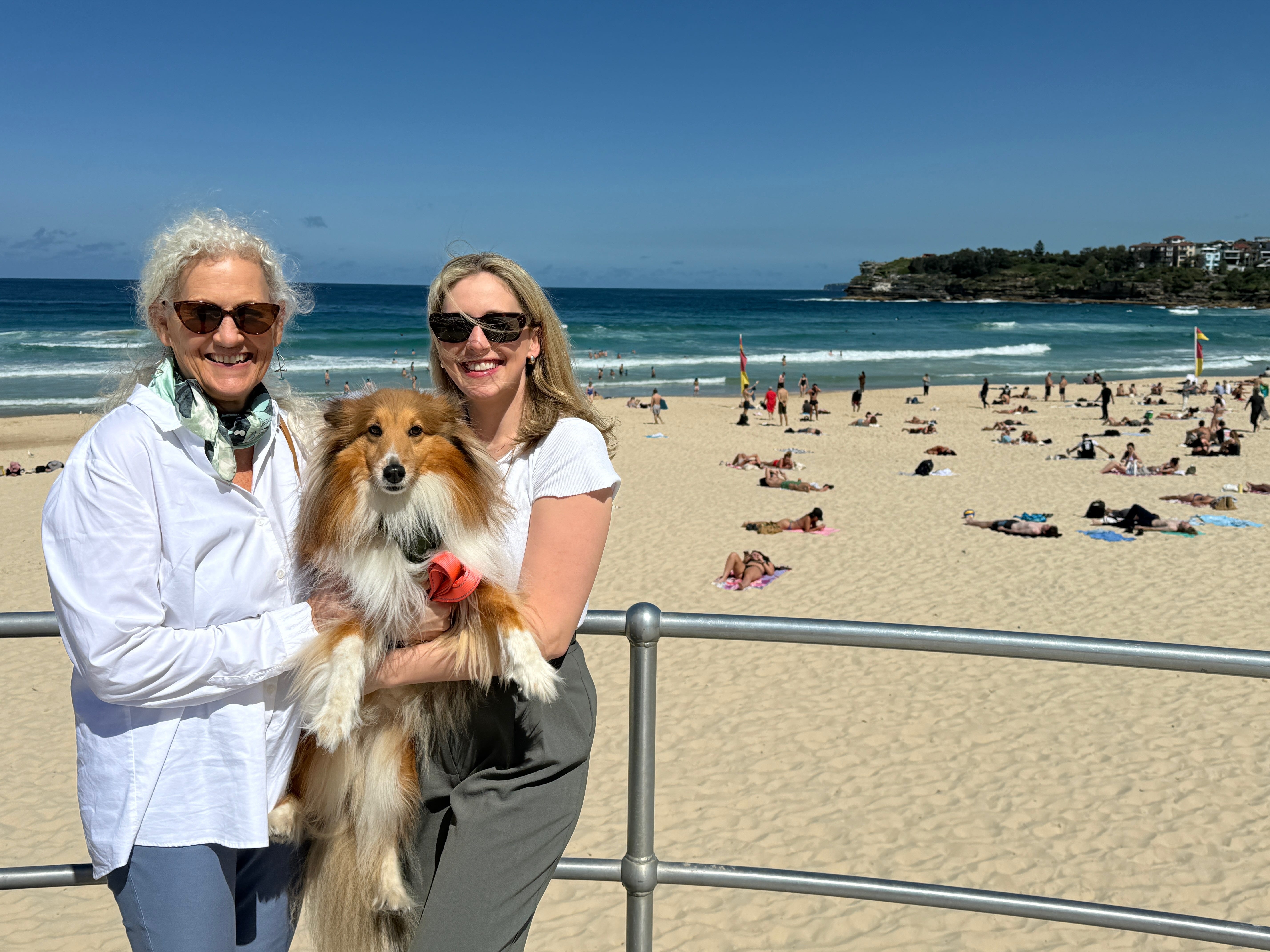
We ask an affable stranger to take our picture. When Basil can’t understand how to pose, we lift him up, pointing his less-than-amused face toward the camera. At the suggested time, we loop back to the restaurant, crossing a small concrete footbridge, noticing a surfer, beautifully sculpted, toweling off in the parking area below.
It’s hard to reconcile that the same place we walked—so full of life and light—became the scene of unspeakable violence. This was Bondi Beach three months ago in Sydney, Australia. It was the bridge where, on a similar beautiful day, a father and son opened fire on a Hanukkah celebration, taking fifteen lives and injuring dozens more.
Most Americans, already shaken by news of a shooting at Brown University, went to bed that night with little knowledge of what was unfolding half a world away. The next day, my daughter, who lives minutes from the site, said, “I was sent the video while the shooters were still active. The sirens were going off all night. It was terrifying.”
In news reports, a refrain emerged: This doesn’t happen in Australia. Australia is not America.
My thoughts scatter. What right do I have to feel any connection at all to these tragedies? That I stood by the azure ocean for a photograph beside my beloved second-born in the same place where people ran screaming from gunfire does not make me special. That life in my country resumes with little interruption after this kind of violence feels less like resilience than resignation.
We all go on with our days.
The world does not stop when people die, not for those who knew them, or those who loved them. Not, in cases like these, for those physically injured, or those carrying the sounds of chaos into their sleep.
I worry about the surge of hostility that follows these events, about how suffering is so often repurposed to further demean the groups people want to despise. I worry about how politicians turn mourning into opportunity and leave so many of us desperately searching for threads of decency, fragments of mercy blown from broken hearts.
Sometimes I reach for numbers, as if they might steady me. This year alone, more than 380 mass shootings in the United States have killed and wounded thousands. Each figure represents families and communities disrupted. Last year there were even more, though a decade ago the toll was far less. The trend lines rise and fall, offering the illusion of comprehension, but the anguish remains unquantified.
This time it feels personal. But it has always been personal, has it not? Every person enters the world with the possibility of becoming part of something singular and irreplaceable. All deaths are tragic in some ways, but some seem to carry more weight. To be killed by a mass shooter is to be caught in a failure that feels preventable, a convergence of choices not made, warnings ignored, protections withheld. When accountability slips away, sorrow has little choice but to harden into anger.
In the hours after hearing the news, I do laundry, open email, finally decorate the Christmas tree. Everything feels absurdly ordinary and also like necessary acts of trying to put the world back together with the pieces I can reach.
We are approaching the solstice—the point of greatest darkness here in the Northern Hemisphere and of greatest light to our south. The world does not tilt in only one direction.
I have no solutions equal to the scale of the losses we are living with. When desperation threatens to hollow everything out, I search for something generative. Not quite hope—which can feel too fragile on its own—but an articulation of what I want to see happen, imagining what could thrive, sketching the outline of the universe I want to live in, and letting my heart stretch toward it. This time, I turn to this:
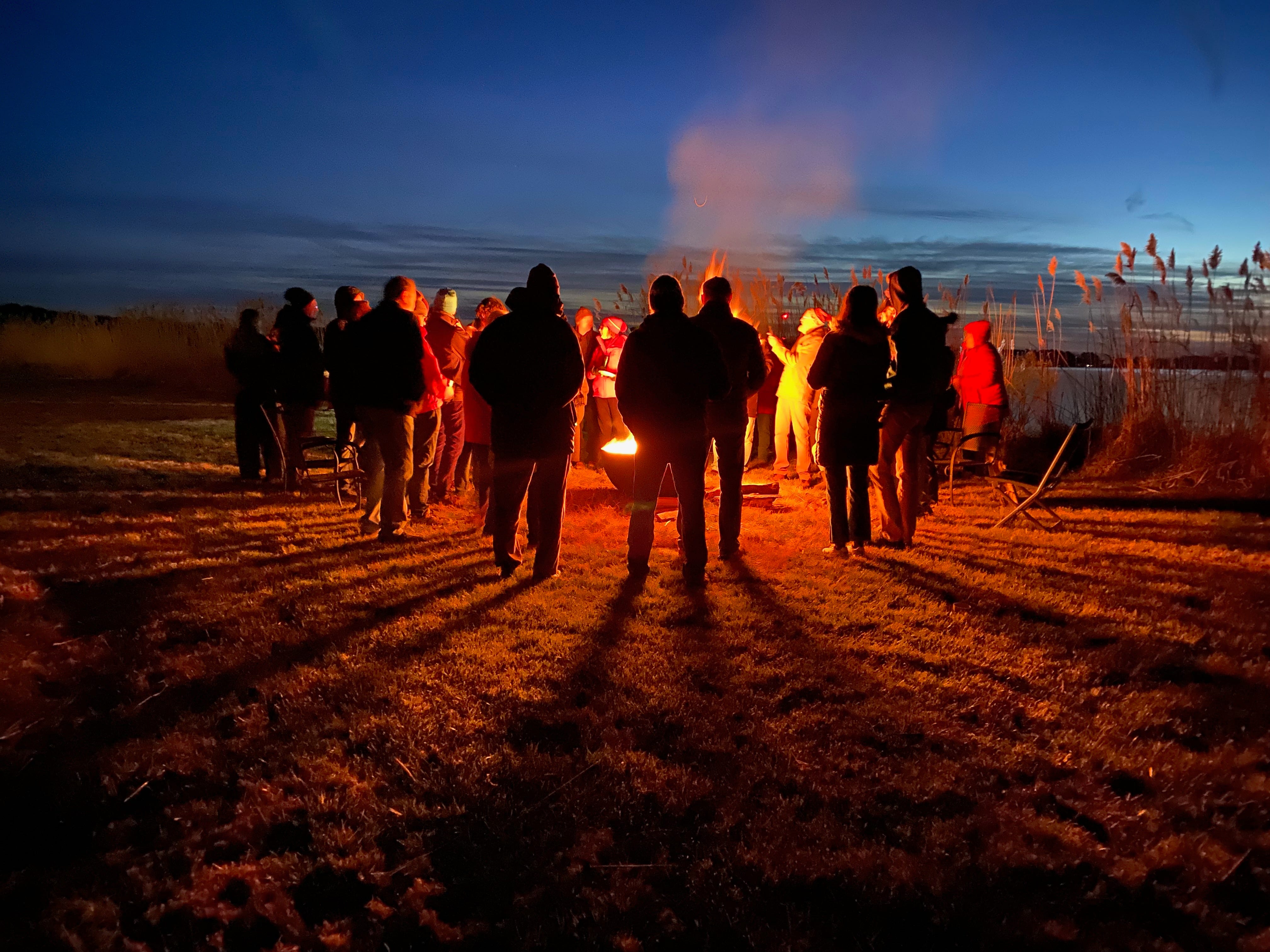
A Manifesto for Direction
I want a world that measures greatness in generosity, one that encourages respect and cultivates care. I want to honor and promote interdependence, share resources, and meet needs with the assurance that mine will also be met.
I want to attune myself to the living world, make decisions with deep time in mind, and hold reverence for what nature understands that I do not. I want to be carried away with wonder.
I want a culture that treats equity as a practice, visible in daily choices about whose safety is prioritized and whose suffering is taken seriously. I want leadership guided by humility and accountability, and systems that uplift many rather than few.
I want to make room for sorrow when it comes, as it inevitably will, without allowing grief to harden into cruelty or indifference. I want to act on the understanding that preventable harm demands attention, and that what I attend shapes what becomes possible.
I want to loosen my grip on fear, seek sufficiency over security, and trust that enough will emerge. I want to give more than I take, make amends for missteps, and appreciate fully what I already have.
I want to see myself as part of a cooperative community, one where the future is built through collective action and agency.
As the earth turns toward more light in one place and less in another, I choose to orient myself toward what I can grow, believing that direction matters, even if the path is unseen.
~Elizabeth

Thanks for spending this time with me.
If this piece stirred anything for you—agreement, discomfort, grief, or reflection—I welcome you to share that in the comments. You don’t need to have a fully formed response. Sometimes it’s enough to name what stayed with you.
Reading your thoughts and engaging with you is one of the ways this work feels less solitary, and I’m grateful for the insights so many of you bring to these conversations.
Take gentle care of yourself this week, and thank you again for being here.
I appreciate you doing the audio recording, I’m sure it wasn’t easy. It makes it more personal for me. Thank you for being a sane and thoughtful voice in the face of such profound loss.
I was going to compliment your photo, and then I read further. I want what you want. To me, your words are a prayer. They should be spoken and shared. Hugs to your daughter, too, during such a difficult and sad time.