

If you prefer listening, I offer an audio version here. ⤵️

I wonder if you’re like me. When I pull into a parking lot I visit often, I aim for the same few spaces. When one of them is available, I feel a small flicker of satisfaction, the pleasant click of a puzzle piece dropping into place.
The lot could have plenty of perfectly acceptable spaces. If my preferred spot is occupied, I park somewhere else and carry on with my day without a nanosecond of additional thought. It may also be obvious here that I do not live in a big city. Still, there’s this thing about favorites.
I’m not alone. A friend of mine gravitates toward a different cluster of spaces, but gravitate she does. My perfect parking spot involves a left turn; hers is to the right. Someone else drives a memorable orange Chevy that I’ve come to expect in routine spaces every time I see it. Same with the enormous blue Ford F-150 and the sporty black Mazda Miata that I always mistake for an empty place until I get past the SUV parked next to it.
Not long after recognizing this quirk, I stumbled across an article about the “explore-exploit problem,” sometimes called the optimal stopping problem, and occasionally attributed to Richard Feynman and his famously calculated approach to restaurant menus. It sounds like the kind of thing that would require a whiteboard and multi-colored dry erase markers until someone removes all the math and just hands you the idea, like a ham sandwich when you’re famished.
Every four to six weeks, my husband and I order Chinese food takeout. We rarely vary what we order. Once in a blue moon, I’ll get egg foo young in place of my Singapore mei fun, and then spend the whole meal pretending I don’t miss the mei fun. But it has never once occurred to me to consider this culinary lack of adventure against how much time I have left to find a new selection.
That is more or less what Feynman figured out. At some point, people decide whether to keep searching for a better option or commit to one that already works. The math suggests there is actually a prime moment to stop exploring and settle, but most of us never consciously figure that out. We just stop looking, behaving as though we have solved the formulas. We find our mei fun and exploit the rewards. The egg foo young is a regrettable foray back into exploration. The familiar wins whether we chose it mindfully or not. That is true when placing a restaurant order, mapping a route home, finding a partner, or, apparently, parking a car.
Once I started looking for examples, they popped up like dandelions. The parking space was a seed, and when I watered it, other things began to grow.
I work in agriculture, and there is not much that stumps a room full of well-meaning outsiders in comfortable shoes more than why farmers are so reluctant to try something new. At this point in the environmental movement, farmers are used to being thought of as both stubborn and callous, but those are lazy descriptors.
Farmers operate in a world of narrow margins, expensive equipment, fickle weather, volatile markets, rising input costs, and a thousand variables that can turn a promising season into a punishing one. Every decision sits atop a stack of risks, the way my husband balances full glasses of wine on top of a slippery stack of magazines. When somebody arrives with a shiny new practice, a novel crop, or a different way of managing the land, the farmer is not simply concerned about whether it might work. She is worried about what happens if it doesn’t, and that is an entirely different problem.
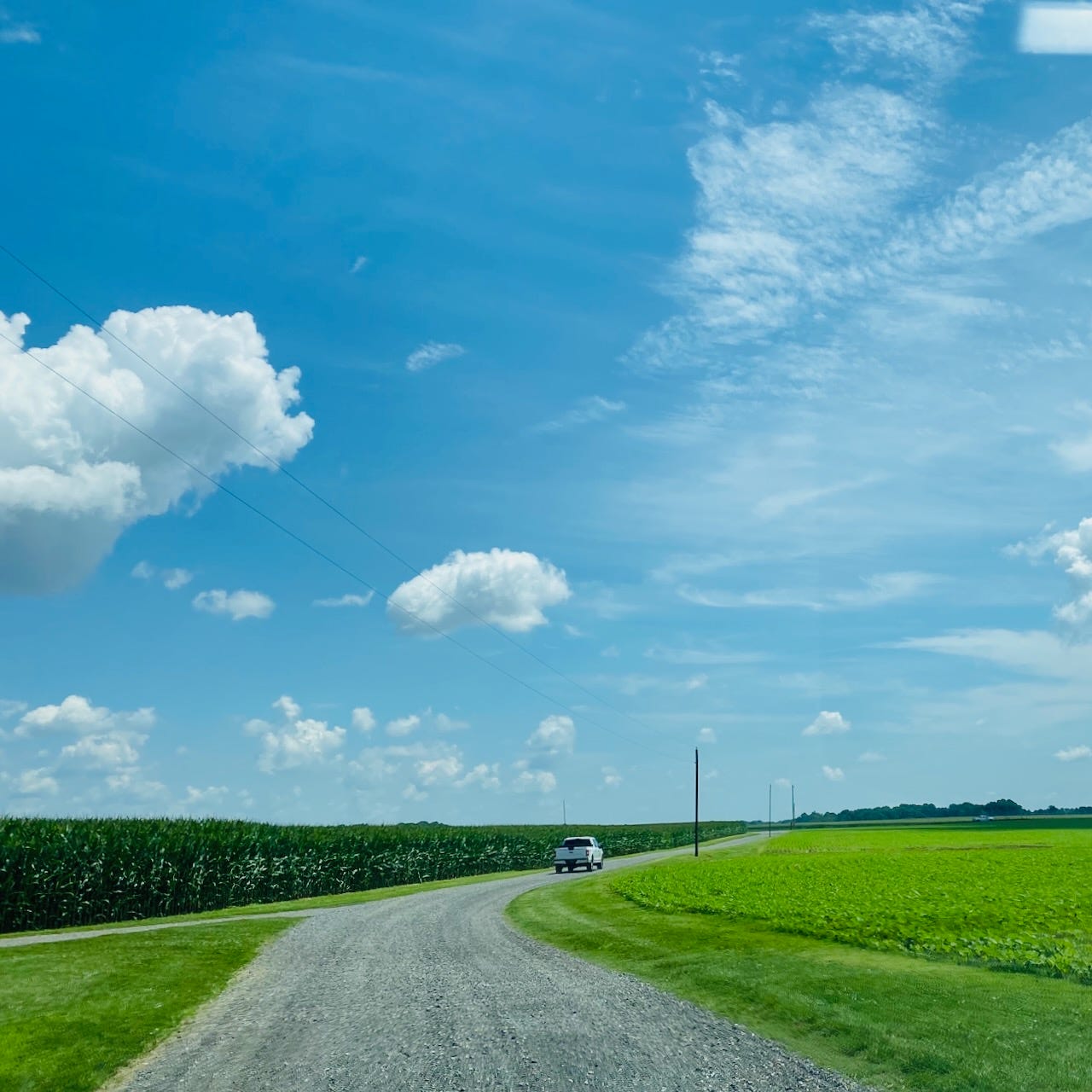
Chemically intensive, single-crop production systems didn’t catch on because generations of farm families woke up one morning and decided they wanted degraded soil, resistant weeds, and dependence on expensive inputs. They adopted those systems because they promised stability and productivity, and for the most part, those systems have delivered.
If you want anyone to try something different, you don’t begin by telling them how wrong they were. You lower the risk. You provide funding, offer training, create demonstration plots, and help them run experiments on ten acres before they bet the farm on it. You make exploration safer.
That is what good agricultural support work often accomplishes. It creates conditions under which curiosity can survive in the same room as uncertainty. Human beings make countless risk calculations every day, sometimes consciously, often not. Their lives have taught them that stability has value, that uncertainty carries a cost, and that familiar solutions are, well, familiar.
Working in agriculture long enough, you start seeing the same pattern everywhere. Politics included. I am convinced we misunderstand political persuasion in much the same way we misunderstand agricultural change. People talk to and about voters as though they are computers waiting patiently for the next data upload. If only the correct statistic, chart, argument, or slogan could be delivered with sufficient force, the scales would finally fall from their eyes. Presumably, people would then apologize, update their priors, and go back to being reasonable. Any day now.
Opinions do not work that way.
A person who has supported the same party for twenty years is not making choices in a vacuum. They have relationships, loyalties, habits, memories, values, and stories about how the world operates. Their political identity is woven through their decision-making like telephone wires. When strategists consider how to persuade such a person, I wonder whether they spend as much time thinking about the message as about the perceived risk of acting on it.
Political campaigns tell people they are voting against their own interests, implying that their families, friends, civic groups, and water cooler companions are fools. Identity-threatening conclusions are proffered like those guys selling surplus meat out of the back of an open pickup truck, and then the seller acts surprised when the door is slammed in their face.
If somebody believes, as I do, that concentrated wealth and the associated corruption is harming the country more than the two-party system, the challenge is not merely proving that point. It’s helping people explore that possibility without feeling as though they are being asked to surrender their sense of self and community, or to let go of their life’s story. The same principle applies across the political spectrum. Everyone is operating from a set of assumptions that have worked well enough to get them this far. We are all, in our own ways, parking in familiar spaces. A meaningful campaign starts with establishing that we’re not asking you to upend your life. We’re asking if you want to try the menu special.
I can imagine what some of you are thinking right now. Yes, the political moment feels like it blew through the five-alarm fire back in 2016. Most of what is happening defies ordinary explanation or justification. But if you have ever tried to out-holler a hound who has decided it is time to go, you already understand the limits of volume as a persuasion strategy. Screaming that the sky is blue does not change the vision of someone who believes it is purple. It just makes you hoarse.
Allow me to create a little scenario to help bring all this to life: Consider what happens when you suggest someone switch the sports team they support. I don’t mean develop a passing appreciation for another franchise, or agree that their stadium is quite nice. I mean actually switch.
“I’ve been thinking,” you say, as you take in the latest match at the bar down the block you both enjoy, “and I really feel like you’d be happier supporting a different country.”
Your English friend looks at you the way you’d look at someone who just suggested taking in a bagpipe concert.
“We invented this sport,” she says.
“No you didn’t.”
“We absolutely did.”
“The Chinese were kicking a ball around in 200 BC.”
“That was a different thing.”
“The Greeks——”
“Also a different thing.”
“The Aztecs——”
“All completely different things.” She straightens slightly. “We codified it. Which is basically the same as inventing it, and I will not be taking questions.”
“Right. Well, 1966 was a long time ago. That’s the last time England won the World Cup.” You lean in slightly. “I’d love to hear more about how your life has improved because of your allegiance to this team.”
She takes a long sip of the Pliny the Elder she orders every time you meet up at this place. “It was only sixty years ago,” she says. “We’re due. Any tournament now.”
You have presented your findings, and they have been escorted out. Nobody here is being stupid. They are being human, which is actually considerably harder to work with.
So, what helps?
If I could crack that code I might have a future in political marketing, which, for the record, sounds worse than a bagpipe concert. But I took a shot at some campaign slogans that might be worth a bumper sticker, a meme, or a brief pause for station identification.
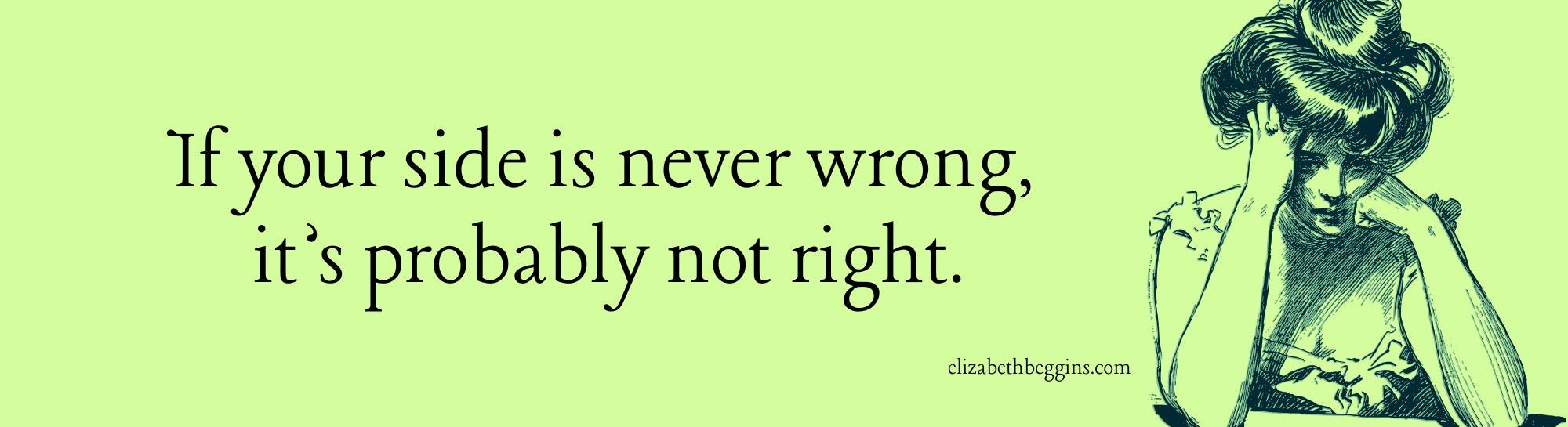
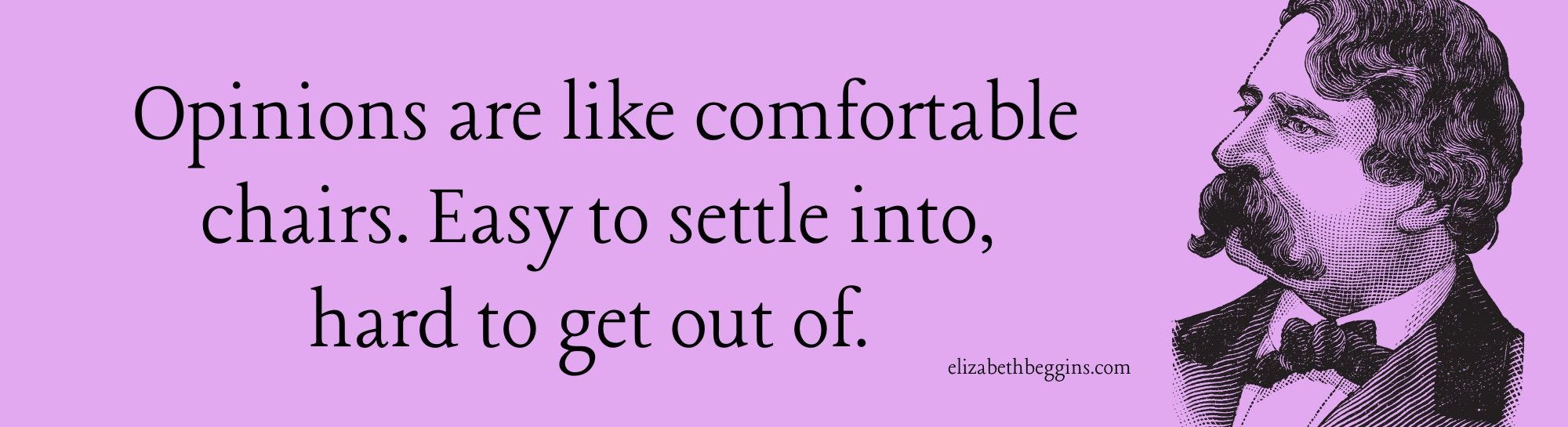
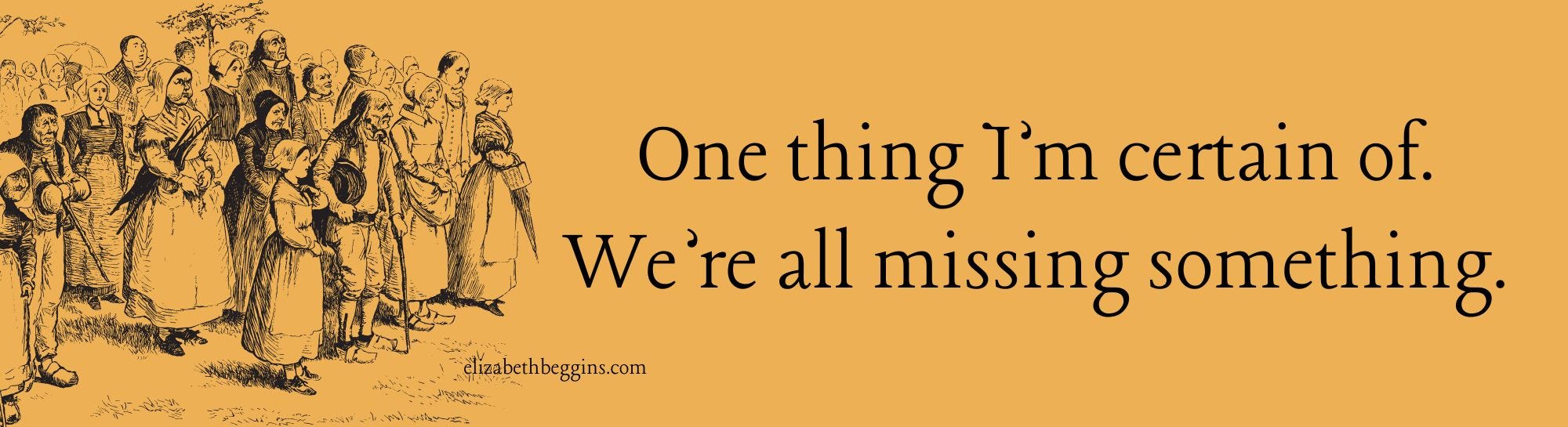
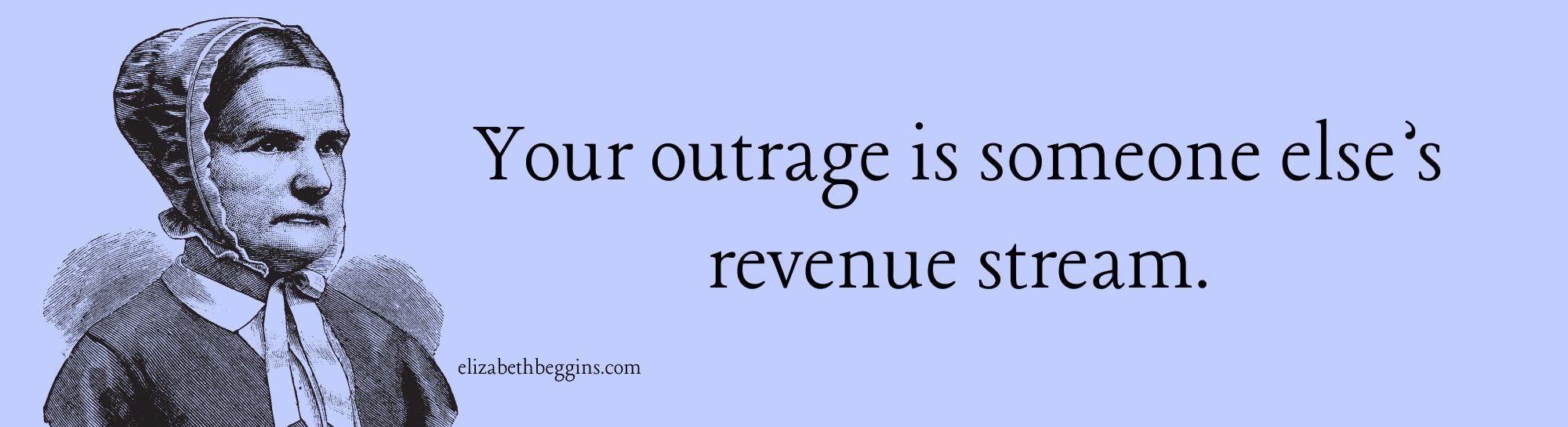
I still park in the same spots, if you’re curious. My preferred space is not objectively better than dozens of others, but it is a known quantity in a world crowded with decisions. I have explored enough to feel settled, until the world parks something in my way, and I find, after a little circling, that there are other spots available.
The more I think about it, the more I suspect that a surprising amount of human behavior begins right there.
~Elizabeth
I still don’t know exactly where all of this leaves us, except maybe a little more curious about why we do what we do, and a little more aware of why some people may be driving around somewhere so very different from us.
If today’s piece made you think, or laugh, or both, passing it along costs nothing and means a lot. A heart or a restack helps me reach more readers, which just makes it that much more fun around here. And if you haven’t subscribed yet, doing so ensures a thoughtful essay, every week, on time, in your inbox, with no bagpipes. Free subscribers get everything. Paid subscribers get the same thing, plus the satisfaction of supporting the creative energy it takes keep this going. If you’ve been meaning to make the jump, consider this your nudge. One-time tips are also an option and, truly, any contribution means so much.
Comments are open, and I read every one. I’d love to know if you have favorite parking spots, or take-out selections, or soccer teams. What are you curious about this week? It doesn’t have to be political. It can be as small as the egg foo young.
Afterward:
Each week I close with something specific to do, because I believe we can make a difference when enough of us show up. Our spheres of influence are bigger than we think, and doing something modest beats standing still while waiting for something enormous.
Try This:
The next time you find yourself in a conversation with someone parked somewhere different than you, skip the argument and look for the overlap. What do you both want for your kids, your community, your country? Start there. You might not end up agreeing on much, but you might be surprised how close you both are to the same starting point.
See you soon!
So much of what you write about farmers made me think of teachers. In my first year of teaching, my department head told me I was a risk-taker. I was surprised; I thought of myself as a cautious person who didn't do anything unless I was pretty sure it would succeed. But to her, my emthusiasm for trying new things seemed risky. Later, I became a person whose job was to support teachers in developing their practices, and I was continually surprised by the resistance I encountered to even trying new things. Even when what they were doing was not giving the results they wanted. I did a lot of what you describe here as being ineffective--making a case with statistics and examples and logic. Didn't ever work, and I came to dislike that job quite a bit! I'm glad I don't have to try to change anyone's mind for a living now. Your words remind me of how hard it is to do that. Thanks for deepening my understanding of why.
I would like to organize the rest of my life as well as I organize my parking spots. With parking, I have considered all the possibilities and have settled on the ideal spots supported by a lot of well-considered reasons. So I no longer have to think about where I park. I just go to my spot.
I sometimes wish my human interactions, political opinions and spiritual life could be organized that way. I could choose, after years of deliberation, that I will always vote for a Democrat regardless of what the candidates actually say or demonstrate, That way I don’t have to spend a lot of time evaluating the relative merits of each of the candidates.
If I can decide after years of reflection, reading, talking and listening that there is a God, then I shouldn’t have to think about it any more. I can just park in my usual pew at church
Then along comes a politician or a theologian who “makes” me take a look at things differently. I want to say, “Leave me alone. I have already decided where I am parking”.
I served recently as a Democrat poll watcher. A Republican poll watcher sat next to me. She loves her grandchildren. I love mine. She dotes on her son. I dote on mine. She’s proud of her spouse. I’m proud of mine. She wants her grandchildren to get a good education, find a career they like, develop good relationships, have fun. I want the same. As much as I don’t want to, that experience causes me to at least consider parking in a different spot - not clear across the lot, but maybe one space to the left or right.
I’m grateful for your writing, and for the thought it stimulates in me.