

If you prefer to listen to today’s story,
I offer an audio version here. ⤵️
I want to tell you about a man I didn’t know well—or not well enough, it turns out. We met the way people do in a small town, and I’ve spent the better part of a year working toward telling this story. It’s one of the hardest things I’ve written. I think it may also be one of the most important. I’m sharing it today, a few days ahead of my usual schedule, in his honor.
A note before you read: This story addresses end-of-life decision-making and assisted dying.

The date is April 30, 2026, a Thursday. Robert Steven Blizzard has just turned 71.
He wasn’t in the Yorkshire Dales, where he once delivered handcrafted ale in a 1926 Model T Ford and believed, deeply, that small communities were worth preserving. He wasn’t in Hendersonville, the small North Carolina mountain town where he rebuilt his life after a stroke nearly took it. He wasn’t on the Chesapeake Bay, where he spent a few years with his dream dog, Ranger. He was in Switzerland, and it was the last day of his life.*
Steve chose this. He chose the country, the organization, and the process, which required persistence, documentation, psychiatric evaluation and the kind of bureaucratic patience that seems almost cruel to ask of a man like Steve Blizzard. He did not choose the date. It came to him, offered by a Swiss organization called Pegasus that didn’t know, when they assigned it, that they were handing the man a birthday gift.
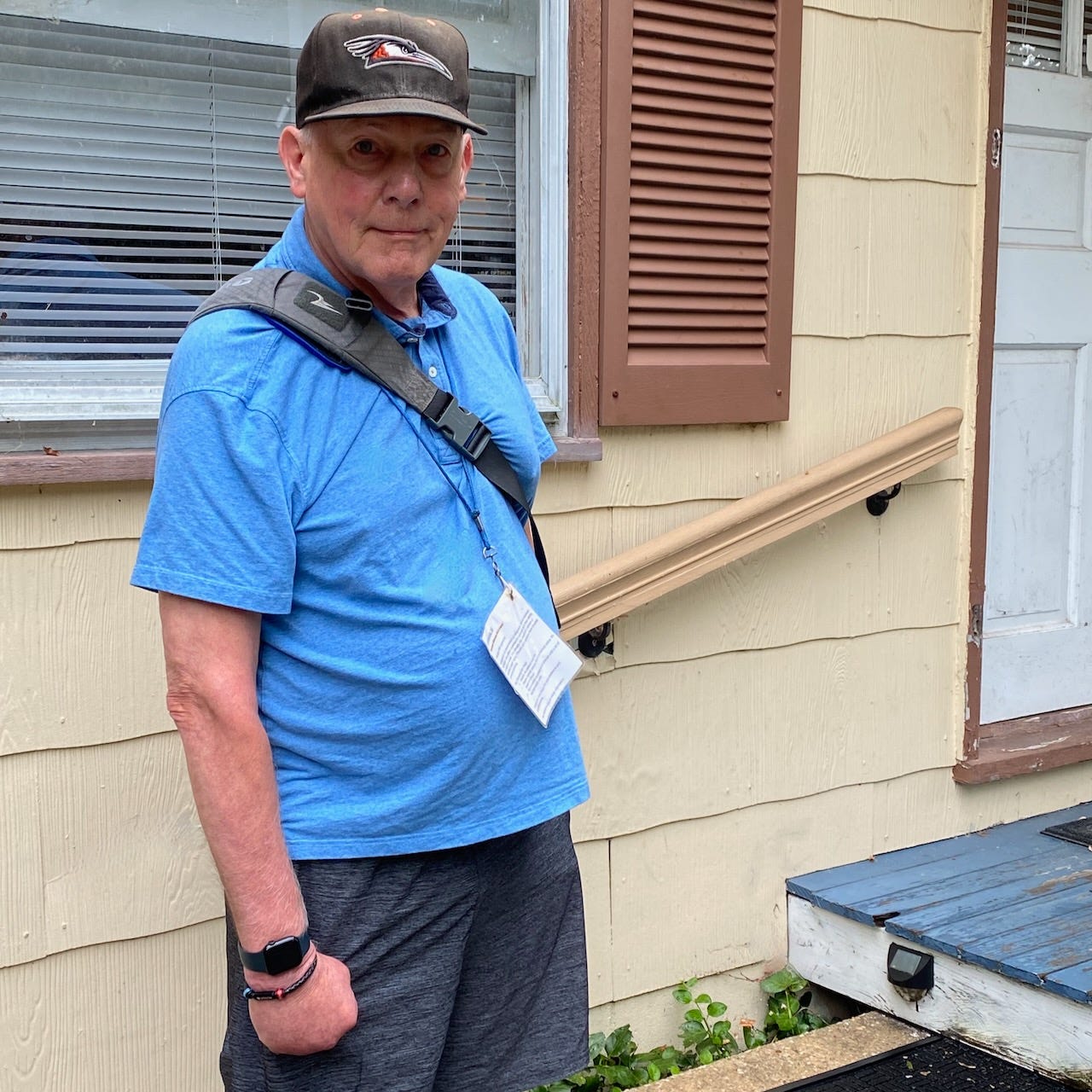
Were I a frequent-flyer like my husband, I’d have met Steve at Blue Heron Coffee, where he, too, was a regular. I seldom drink coffee, so for the longest time, I knew him only vicariously, knew about his stroke, about his dog, how he’d moved here recently. Before meeting him at a holiday gathering hosted by our sailing friend Michael Keene, who shared Steve’s love of the water and became one of the anchors of his St. Michaels life, I didn’t know how little I knew about Steve.
I don’t recall much of our first conversation that night at the party, only that I noticed the brightness of his blue eyes when he shook my hand and that at some point I asked him if he’d ever tried using a speech device. His “no” seemed less like an answer to my question and more like the story of all the things he’d tried that hadn’t worked out after all. I remember thinking I had no idea what it must feel like to be him.
I’d like you to know a little something more about Steve Blizzard—father, businessman, adventurer, brewer, and a man who suffered a massive stroke at the age of 58. He was not expected to survive, but he overcame the odds and has spent the last 13 years living his life.
This is not a story about assisted dying. It’s the story of a man whose days were defined by knowing who he was, going after what he wanted, and moving on when something was done. This decision was the last expression of that same character.
Steve was born in Des Moines, Iowa, a detail that might sound like a small beginning except that it wasn’t. His father was a pioneering physician who did groundbreaking research on growth hormones. Steve grew up, as he once joked, in a house full of people who were either four-foot-one or seven feet tall. He left Iowa for undergraduate and graduate school at the University of Virginia, tried Wall Street for six days—six days—and walked away. He became a map-maker, then stood waist-deep in a Rhode Island snowdrift one day and reconsidered. He went back to school for business, came out a banker, and proceeded to spend the next several decades doing exactly what he loved: growing things. Like an architect with the blueprint of a dream, he had a gift for seeing what didn't exist yet and building toward it.
Steve supported the expansion of companies and institutions, and, later, he helped people found banks. He saw the Skipton Building Society’s Homeloan Management division from two staff members to one of the most significant financial institutions in northern England, an entity that eventually managed more assets than the society itself. He logged two million air miles. In a single week, he was in Lisbon, Los Angeles, Amsterdam, and Hawaii. The pace had consequences; his marriage didn’t survive it. He told a Yorkshire news reporter that all the traveling had eventually become a terrible bore, and he meant it.
What Steve Blizzard actually loved was going deep. In 1988, he moved to England and fell hard for the pubs, the tight-knit communities of the Yorkshire Dales, and for English beer. He learned the rhythms of a place and let them become his own.
When he’d finally had enough of the consultant’s life, he might have retired. Instead, with help from a neighbor, he converted an old barn between the villages of Hetton and Cracoe into Wharfedale Brewery. The first beer was called Folly Bitter after the small stone building where he’d taught himself to brew as a hobby. Steve arranged for local buses to carry the slogan Drinking is Folly, which ruffled a few feathers, then donated two pence from every pint to local charities. People from the community were brought in as employees because, as Steve said at the time, “Anything we can do to create more work for ordinary folk will help to keep these small communities together. Now that is something worth working for.”**
Steve used his Model T Ford as a brewery dray. That right there tells you much of what you need to know about the man, except you’d be missing that he taught himself Chinese and Dutch, that he spoke four languages, performed in pantomimes, restored antique vehicles, and that he played mandolin, banjo and piano.
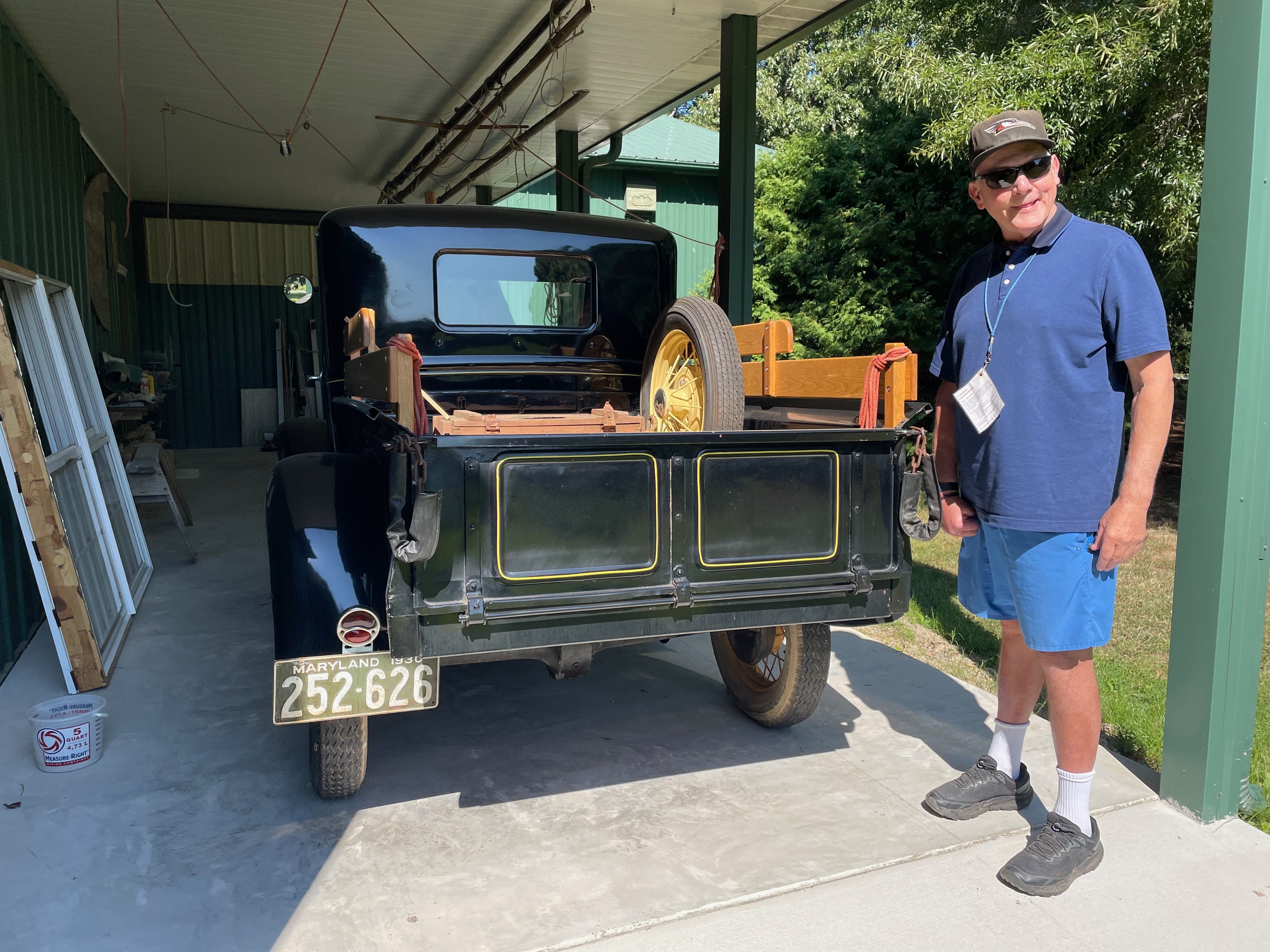
In January of 2013, five minutes before boarding a flight to Sicily, Steve had a massive stroke at Washington Dulles International Airport.
A clot had formed on an aortic valve he’d had since he was 40. In a skull that was already narrow for the size of his brain, the swelling that followed made survival unlikely. When he made it through the first 24 hours, he was told he wouldn’t walk again.
His friend, Virginia, was with him at the airport and kept vigil for three and a half weeks in a neurological ICU in northern Virginia, then six more weeks at a rehabilitation center in Asheville. Both facilities recommended long-term nursing care, but those who knew him best knew that would be his downfall.
Instead, Steve went to Hendersonville, a town he’d loved since childhood summers at nearby Camp Mondamin, and he fought to get his life back with the same focused intensity he’d applied to everything else.
By 2016, three years after the stroke, he was walking Main Street on his own, living independently, working out daily, swimming laps by flipping fully onto his back to breathe, because turning his head was still too difficult. With only two percent grip strength in his right hand, Steve learned to kayak by taping the paddle to his hand, a support he was eventually able to stop using. His trainer said: “Every little step of the way, he wants to do more… I can’t foresee him not having an active lifestyle now.”
There were still so many plans: Drive the Blue Ridge Parkway and old Route 66 in the Model T with his son Jack, the photographer. Visit his son Morgan, the ophthalmologist, in England. One by one, Steve checked them all off the list.
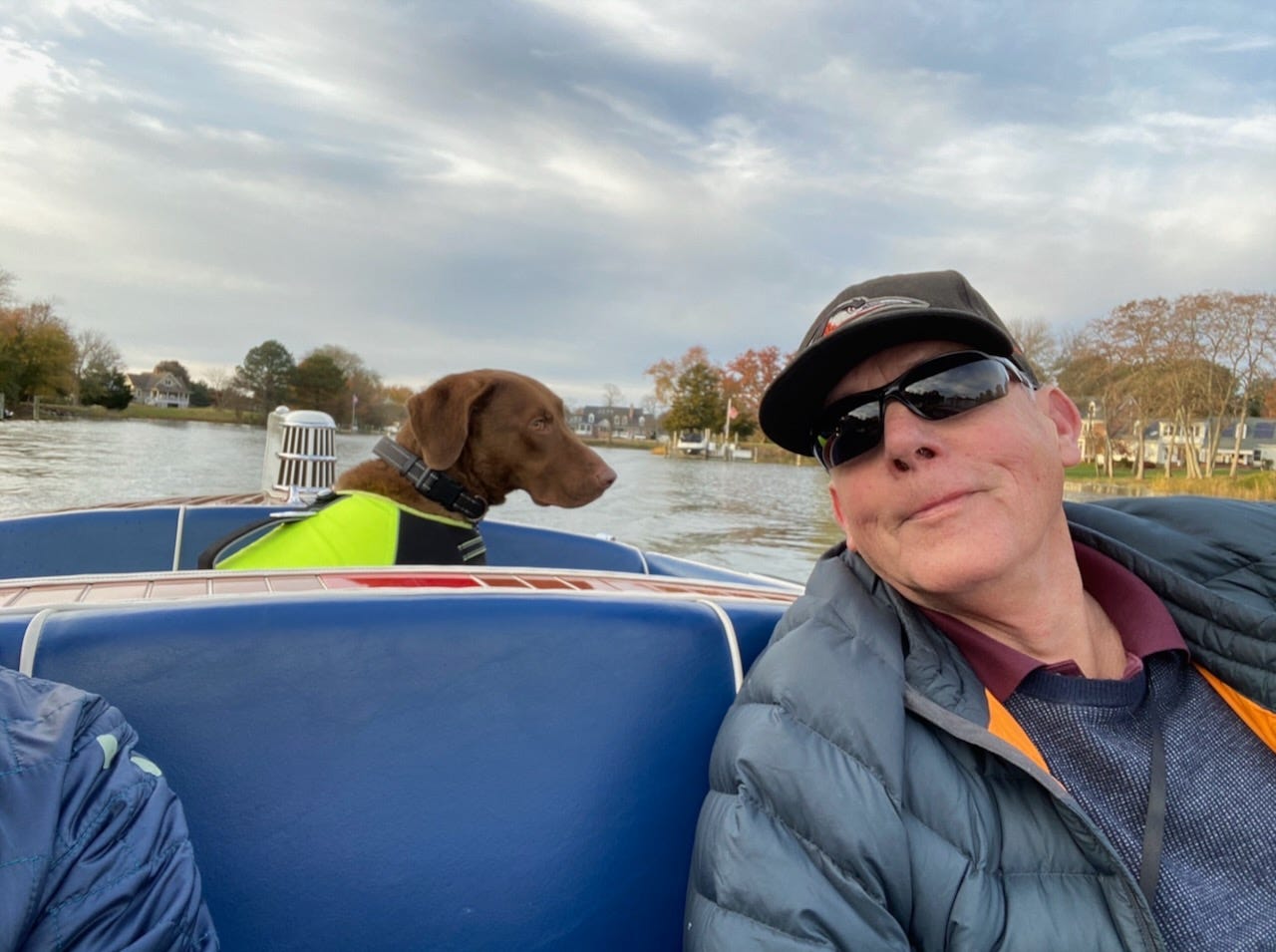
A few years before I met him, Steve moved to St. Michaels, Maryland, with Ranger, a Chesapeake Bay Retriever. Friends worried he’d injure himself tripping over a dog, but the pair thrived together. Steve became a museum volunteer and joined the local yacht club. He and Ranger spent time on the water with friends in his magnificently restored 1947 Ventnor, once breaking down in a shipping channel after dark with Michael; Steve still being Steve. He had three luminous years in the small town.
What the stroke took and never gave back was language. The expressive aphasia was severe. Though he could read, follow conversation, and navigate the world, Steve’s words had no clear route out, a composition without musicians to play it. He fine-tuned his drawing skills, regained the ability to write, and with effort, to speak in fragments. But for a man who had once enlivened rooms and mastered languages, this was an alienating new reality.

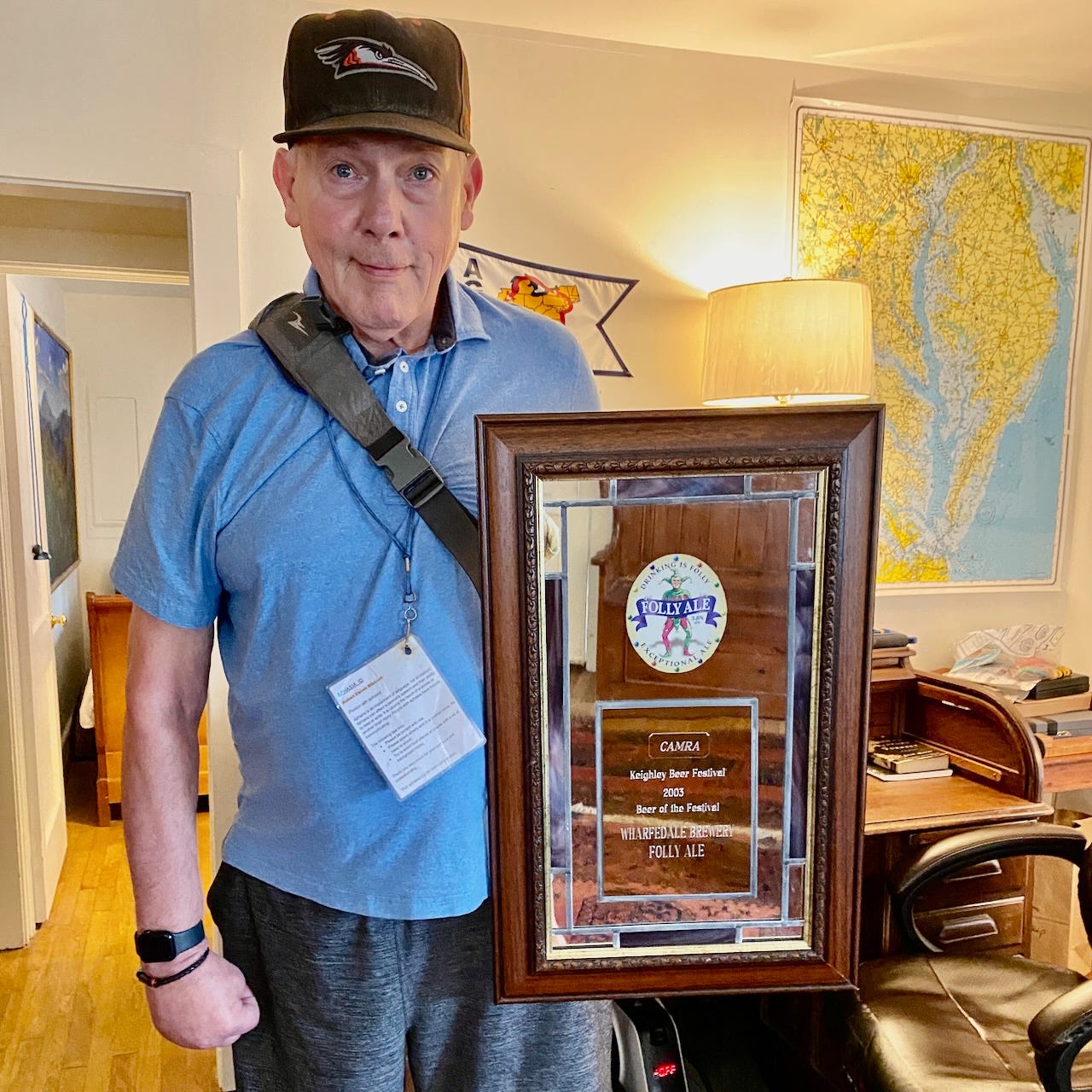
When my husband returned from the coffee shop with news of Steve’s plans to go to Switzerland, I immediately felt the pull of trying to write his story, and it was an honor when he agreed. To work within the limits of what the stroke had taken from his speech, I put together a questionnaire and met with him several times at his home in St. Michaels. The rooms were modest, immaculate, and filled with memories. A substantial desk anchored the living area, art and awards colored the walls. Steve, weeping and smiling in equal measure, called my attention to dozens of major and minor league baseball caps lining the perimeter of a bedroom, from his cross-country stadium trips. He posed for a picture with the mirrored “Beer of the Festival” award and pointed to the cased musical instruments leaning against the wall.
Two virtual conversations with Denise Layfield filled in what I couldn’t reach on my own.
A speech-language pathologist who started as one of Steve’s therapists and became one of his closest allies and staunchest defenders, Denise praised his tenacity.
“Steve does the work,” she said. “He’s a man of vast curiosity–from boats, to Civil War battlefields, to antique cars and motorcycles. He remembers the birthdays of those close to him. He’s still the captain of his ship.”
She also said, plainly, “I don’t think people understand how isolating this severe expressive aphasia is. When you have a mind like Steve’s, full of complexity and interest, to be limited to a few words…” She didn’t finish the sentence.
Steve’s response was just, “Thank you.”
The work between them has been a decade in the making. When they first started, Steve was still unable to read. Denise would order two copies of a book, one for each of them, reading aloud while he followed along. If something confused him, they’d stop, discuss, and reread. Across a couple of years, they worked through at least six substantial books until, eventually, Steve was reading on his own again. He never gave up working on his ability to communicate without words.
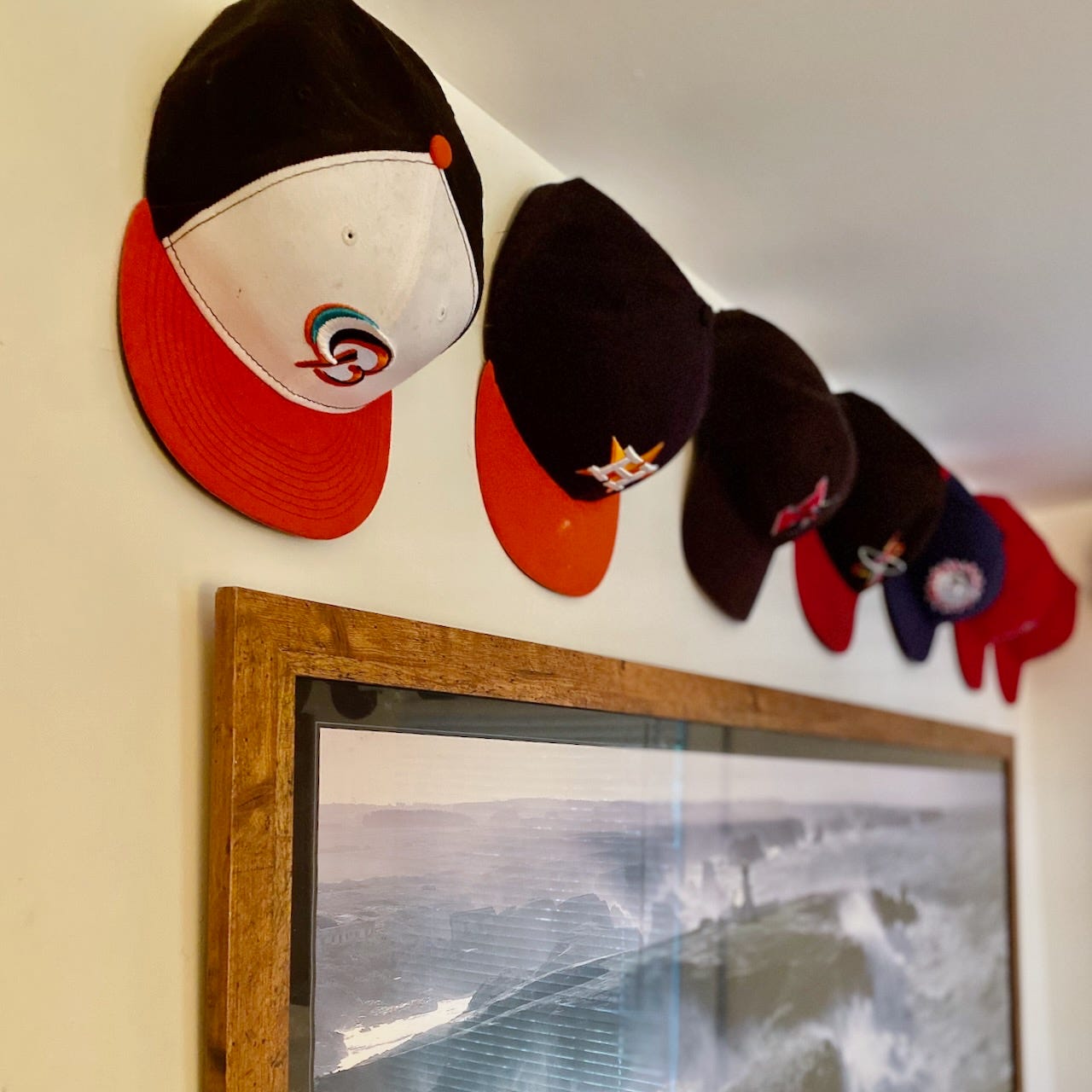
Those caps he’d shown me? Each one marked a stop on a pair of solo cross-country train trips to ballparks across America. With limited speech to ask for help, and no easy explanations if something went wrong, the journey required meticulous advance planning. Denise was available by phone at every turn as Steve navigated train schedules, hotels, stadiums and game times in cities he’d never visited before. His friends thought it was a terrible idea. He went twice.
Early in 2025, Steve made up his mind, and his conviction was as solid as it had been with every bold move in his past. That summer, he found Ranger a new home, a family with land and plenty of love to give. He cried every time the subject came up. The stories that emerged in our conversations, tales of his life and memories, were both joyful and poignant. And each time we returned to the topic of Switzerland, I watched Steve straighten his posture, lift his head, pop his left thumb in the air and say, “Yes!”
The questionnaire asked what he doesn’t want people to assume: That he’s depressed or that he regrets his life.
“I feel like I have lived a full life,” he wrote. “I feel well traveled and well experienced.”
I offered several choices for phrases that might describe him: He saw the world differently. He was always searching. He had his reasons. He was hard to sum up. The answer Steve selected was that he didn’t make small decisions.
About his feelings around this choice: Peace. About his state of mind: Calm.
Applying for assisted death in Switzerland took Steve through two organizations and across 18 months. He was asked, initially, to undergo a psychiatric evaluation to assess his capacity for self-determination, a process that proved nearly impossible to complete. There was no question about Steve’s mental clarity, but getting an appointment with a psychiatrist in the American healthcare system is its own particular ordeal. After months of delays, the process collapsed.
Research pointed to another organization with different requirements. Pegasus, in Basel Switzerland, made their own determination about Steve’s capacity. He was accepted.
His plan was to fly to England in mid-April, spend two weeks with Morgan and Jack in the same Yorkshire community that had once claimed him as a Dalesman, and then carry on to Switzerland.
Steve returned to his friends in Hendersonville for the weeks before England. They visited him every day, played backgammon, took him up into the national forest. The daffodils were blooming. It was 70 degrees.
Not everyone who cared for Steve was at peace with his decision. That’s what love looks like sometimes.
Before he left St. Michaels for the last time, there was a planned gathering at Blue Heron where he spent so many mornings, where my husband came to know him over the years, one conversation at a time, the way you do in a small town. Instead, a blizzard preempted that plan. Some folks never got the chance to say goodbye—not Heather and Jay, whose coffee shop served as a daily gathering place for him and Ranger, not Maura and Will, who cheered the day he finally took his lovingly restored 1955 Panther motorcycle and specially fabricated Watsonian sidecar out on the road for the first time.
Mike and I caught up with Steve at home a couple of hours before he left town. His packed bags upright, like sleeping soldiers near the door, the house still furnished but emptier than it had been on my first visit. I gave him a small stone shaped like a heart. He had it with him on our last video call, and he held it up to the camera with a big, blue-eyed smile.
~Elizabeth
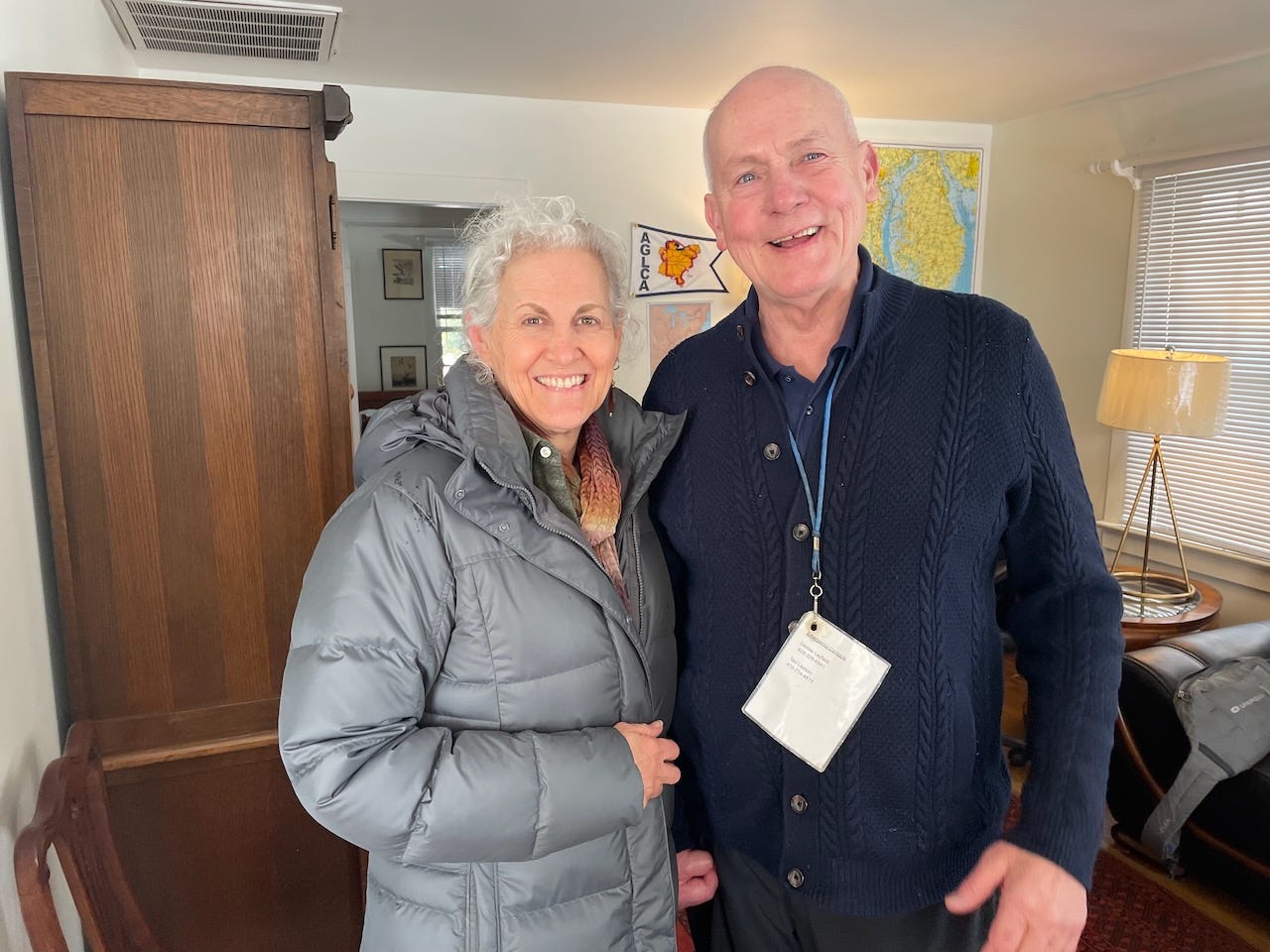

*Steve Blizzard read this story before it was published. He gave it a thumbs up.
**Quotes from his earlier life were drawn from articles in the Hendersonville Times-News (2016) and the Bradford Telegraph and Argus (2003, 2004).
In my experience, dying and death are not topics we lean into readily, despite the fact that none of us will get out of here alive. Steve knew exactly who he was and exactly what he wanted, right up until the end. That kind of clarity is both admirable and humbling.
I’d truly love to know your thoughts, if you’re willing to share. Few topics feel more personal or more difficult to voice. And few, I’d argue, matter more.
Chicken Scratch is always free. It’s an act of reciprocity I can offer to the world. If you find value here, a paid subscription is only around a dollar per essay, and that support means more than I can say. One-time donations are also an option. (“Buy me a coffee” doesn’t quite ring true, but you get the idea!) However you choose to show up—a heart, a share, a comment—I’m truly grateful you’re here with me. See you next week.
I am sharing this comment on behalf of someone who knew Steve here in my community, someone with whom I've only just become acquainted thanks to a mutual friend. The world can be quite small and quite beautiful sometimes. Thank you, Ted.
___
"My name is Ted, I met Steve when he moved to St Michaels when I was asked to be his Driver. Due to his handicap, he was unable to get his license. Over the ensuing 4 years, we spent countless hours together becoming much more than Driver-Client, we became great friends. We attended baseball games (mostly minor league because that's what he liked). We had many other adventurous trips such as decoy shows, to a restaurant in Baltimore where we met a son of a past friend if Steve's. We had weekly trips to grocery stores, libraries, cleaners, blood draws, Dr visits, lunches and to Pet Smart for Ranger. I even took Steve to the airport the day he left knowing it was the last time I would see him. But there was no question that this was what he wanted, his mind was made up. I keep his wishes in mind, but I do miss him. He was a wonderful guy!"
Wow. Well done, Friend. I am writing to Columbia University to suggest they award you the Pulitzer. Thank you for doing this.