

An audio version of this essay, read by me, is available here.⬇️

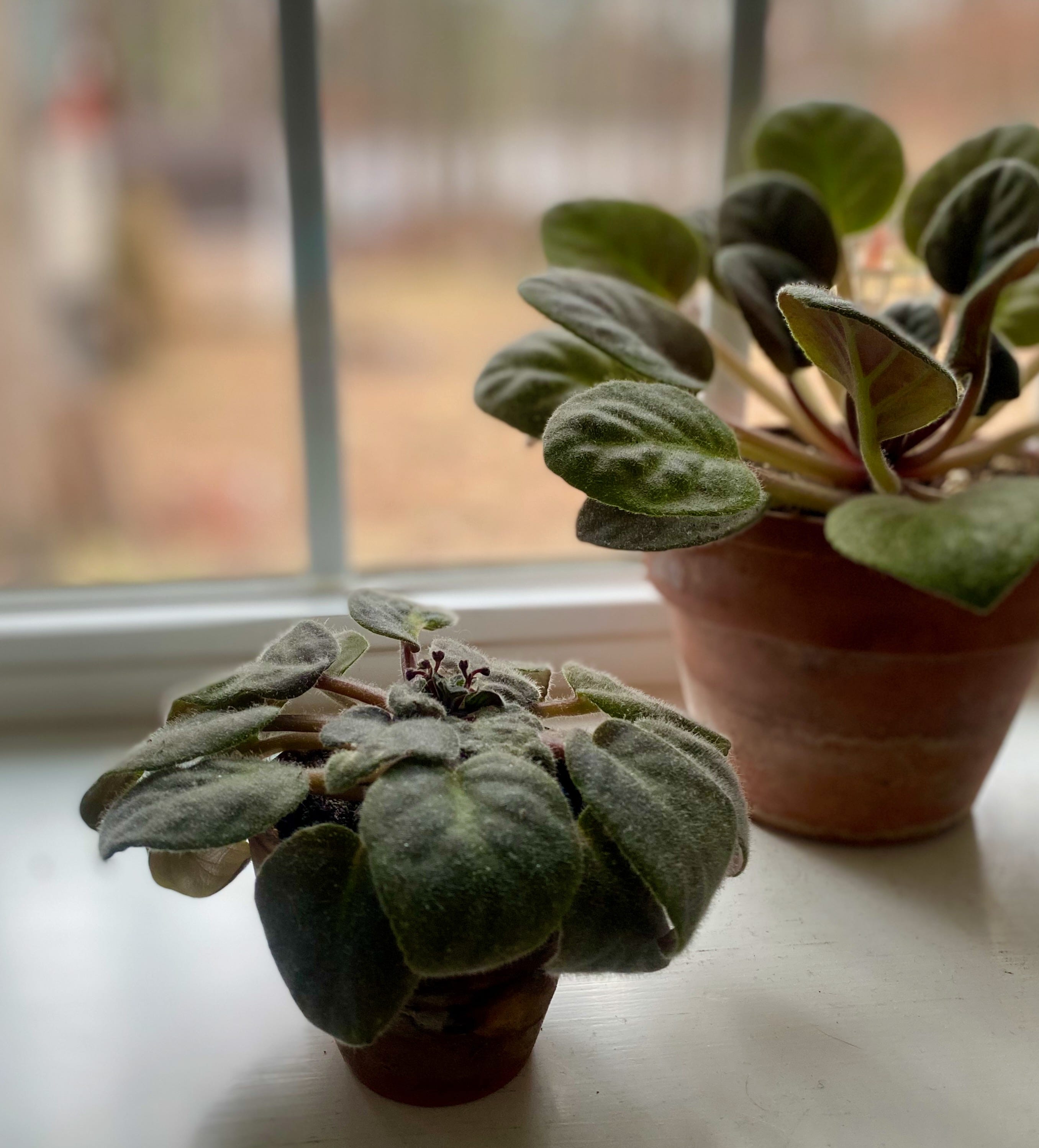
There is a pair of African violets on my windowsill, both saved from death with two salvaged leaves. One has been tended properly, moved to a larger pot as it grew. The other, less than half the size of its companion, has been left to languish because the person responsible for its care never managed to find another suitably-sized container. The smaller, neglected plant is getting ready to bloom.
This is what some living things do when the walls close in. Plants increase flower and seed production when they sense they’re running out of time, a last push at reproduction, at leaving something behind. It’s called a terminal investment strategy. I love thinking of plants as strategic.
Coyotes and wolves do something similar. When these species are heavily hunted or controlled, more females breed, younger ones reproduce, and litters tend to be larger. Paradoxically, as humans try to suppress them, their populations often rebound quickly, sometimes expanding their range.
Last week, a piece in Knowable Magazine featured a delightful cast of animals—from leaf-nosed bats and sugar gliders, to fat-tailed dunnarts and dwarf lemurs—that can intentionally let their body temperatures drift in response to weather, hunger, or danger. It’s the internal version of pulling up the blankets on a chilly night. This flexible tactic, called heterothermy, lets them pause the relentless need to stay warm, surviving by deliberately conserving resources until conditions improve.
We are not so different from any of them. Our stresses are real, and so is our capacity to respond to them. The question, especially now, when so many of us are standing in front of problems too large to fix, is whether we can stop staring at what we can’t do long enough to see what we can.

I’ve spent the better part of forty years as a non-profit professional in different organizations with different causes. But I kept the same underlying conviction: the work had to matter. I knew this about myself before I applied for my first real job. It’s a particular kind of person who goes that route, and if you’ve done it too, you probably recognize the texture. There’s satisfaction, yes, but there’s also a chronic low-grade frustration over never being able to do enough, the near-constant sense that a better approach exists just beyond your reach, the one that would finally move the needle in a way nothing so far has managed to do.
At my friend Amy’s prompting, I took an Enneagram quiz recently. I’d also done the other ones: StrengthsFinder, Myers-Briggs, an EQ assessment that informed me my emotional intelligence was deficient across all categories, which made me want to fix the test, because of course it did. But I’d missed the Enneagram. Turns out I’m a One, the Reformer, with a strong drive to improve things, and a relentless internal critic, the type that looks at a broken system and thinks: there has to be a better mousetrap. There has to be.
Often, I have no idea what people like me, or you, are supposed to do right now, in a moment when the things that need repairing are so numerous and so fast-moving that even naming them feels insurmountable. Whether I’m following it or not, the news arrives every morning with new emergencies, and so much hand-wringing, which I gather is very on-brand for a One and turns out to be spectacularly useless.

Across the street from us, there’s a modest rancher where Louise lived for 34 years. We knew her from the pharmacy where she worked. Most of the community knew her. When the hospitalizations got to be too many, her daughter moved her to a nursing home. She didn’t last long after that. Three sets of renters have come and gone in the five years since.
There was the couple with two boys—a man-child one, and one still in single digits—who horsed around outside together in a way that made me optimistic for siblings everywhere. Their mom, who said she hated being inside, talked on the phone into the night, her bare legs propped on the metal patio table in the front yard. I never understood how she tolerated the mosquitoes.
There was the couple with the toddler called Goose, temporarily displaced while they renovated another house a few miles away.
And there was the trucker couple who’d left the city to get her away from the stress that was making her sick.
When, after less than a year, we saw them ferrying armloads across the frozen pavement to the back of their pickup, we had a hunch they were leaving, but it was several weeks before we learned they’d both lost their jobs. Nothing personal—routing changes, efficiencies, logistics. They were heading to North Dakota to live with her mother while they got themselves situated. New work was already lined up. It was going to be okay, they thought.
The leaving didn’t go smoothly. He drove one of the trucks into a snow-filled ditch across the street; the massive rig that lifted it out showed up at 9 PM on a 20-degree night. They hauled their camper to a locksmith after losing the keys in the chaos of packing. The day they finally pulled out, they tucked a small, empty cooler where they could reach it easily.
“That’s for the dog,” she said. “He’s 17. There’s no way I’m leaving him behind if he dies before we get there.”
This is a concatenation of calamities, popularly known as a shitstorm. And yet they made one tender, practical decision, the same one the violet and the coyote make. They worked with what they had.
The scale doesn’t matter as much as the doing. Tending what’s in front of me, feeding what shows up at my door, planning ahead for a loss I can’t prevent: these aren’t consolation prizes for people who can’t manage the bigger things. They are the bigger things, broken into the size of one person’s hands.

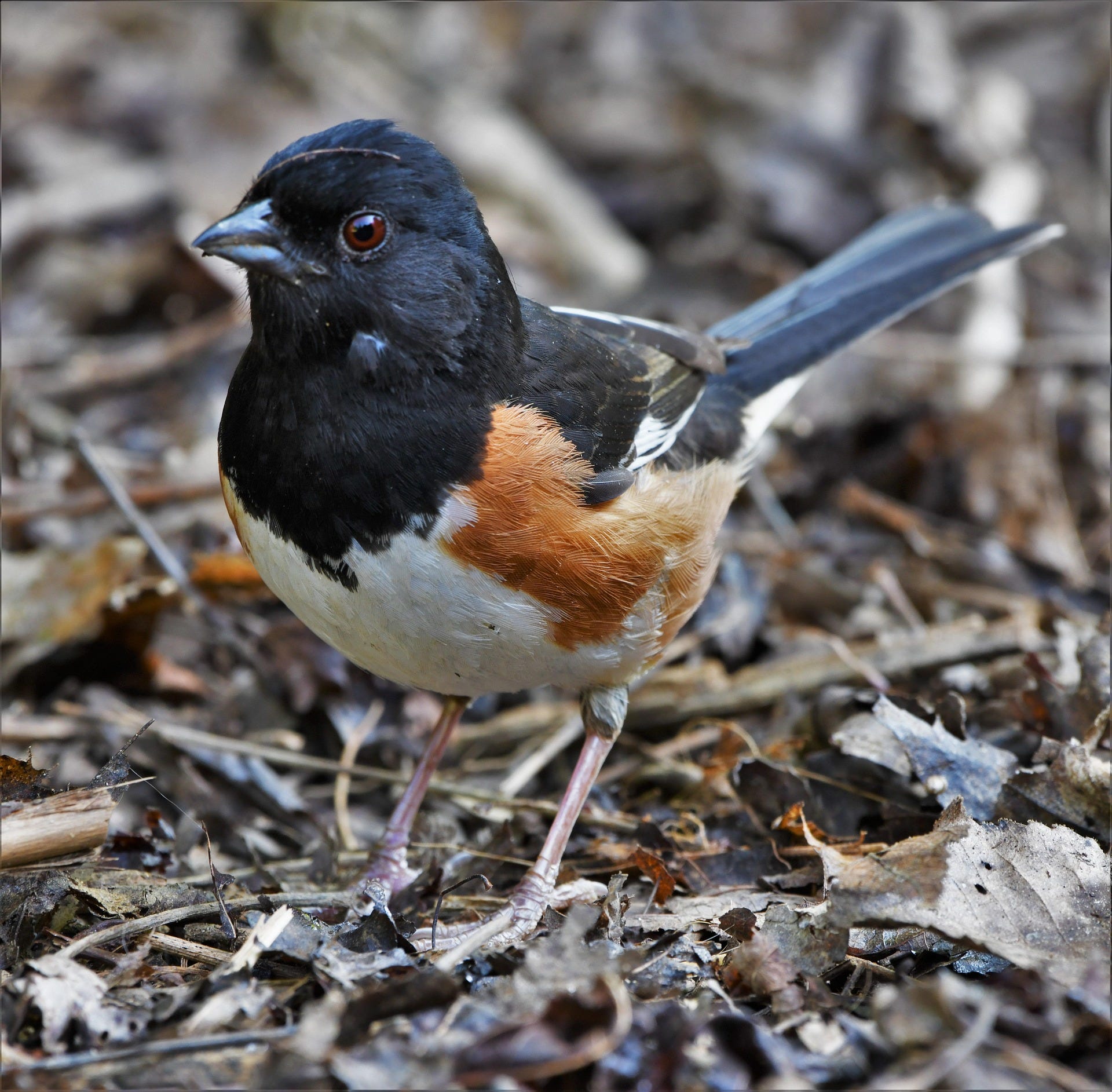
An Eastern Towhee visited my feeder recently. In 32 years of living where I do, I’ve never seen one. They’re ground feeders mostly, scratching backwards at leaf litter like a chicken, and you’re more likely to hear one than see one, a catchy drink-your-teeeea from somewhere in the underbrush. That day, the ground was covered in snow again after a short thaw between storms, so up it came.
When I write about the beauty around me, I worry that I’m leaving the harder work to others. But writing is in my specific capacity, the cooler I can put within reach.
So. What else is in my hands? Not what should be there. Not what would be there if things were different. What is actually there, right now, that I can do?
I start with that.
~Elizabeth

Okay, I’m handing the talking stick over to you now.
What’s coming to mind this week? When the weight of everything feels immovable, what do you find yourself actually doing, what you reach for? Is there something in your hands right now, or something you’d like to pick up, metaphorically or for real?
You can let me know if this landed for you by leaving a comment 💬, hitting the like button 💚, sharing or restacking ♻️ the post for someone else who might enjoy reading it today.
If you're not yet a subscriber, I'd be delighted to have you, and if you’re not a paid subscriber and can see your way to making that shift, that’d be the bee’s knees. 🐝
Afterward:
I’m including this section as a way to turn reflection into action, if you want. Each week, I’m sharing one small, concrete way to raise your voice, because sustained, visible engagement is one of the few levers we still have to influence the world around us.
Try this:
This week, take ten minutes to write down three things you’re actually capable of doing. Not the things you wish you could do, not the things that would matter most if only you had the time or resources. The real things, the ones already in your hands. Pick one and do it before the week is out.
As always, so timely your posts are to me, Elizabeth. I just started reading Atomic Habits to try and make some changes for myself as it seems important to accomplish something every day no matter how miniscule. I bought a few pairs of fleece-lined leggings in a brand that I enjoy myself and donated to a homeless shelter. I track the birds in my back garden on my Merlin app and we are up to 145 different species - I remain pleased that we must be doing *something* right and yes, the Eastern Towhees are also here! I am tending my own African violets in their Ziplock bag oxygen tents and ONE is finally showing tiny new leaves! Microscopic triumphs when I feel so helpless.
I am like you - I can never accept that there isn't a way out, something else to try.
The state of the world and all its hatred haunts me as I think it does most women, especially - and also, I have had a loss of innocence about how poorly women are treated and often with such contempt. My best friend has been a top neurologist for many years but when she was a resident, she and the other (female) residents were always the ones dispatched to fetch coffees for the (male) doctors. She is one of the brightest lights in my life and in her patients' lives. Finally, I am an INFJ with Myers-Briggs - you? Thanks, Elizabeth for writing xo
Today was like reading a great book... I wasn't giving any thought to replying because I was enjoying all your little mini stories and adventures with neighbors and birds.. But I have to say before you ever took the new personality test.... having known you most of your life and worked with you endless hours... I could have told you you were a reformer.... and liked to improve things..... Couldn't have done without you...