

If you prefer listening, there’s an original audio recording here. 👆
Note: I’ll be taking a break next week and using all the time I can snag for a long-awaited rendezvous with people who are very, very dear to me. I look forward to seeing you again in two weeks.

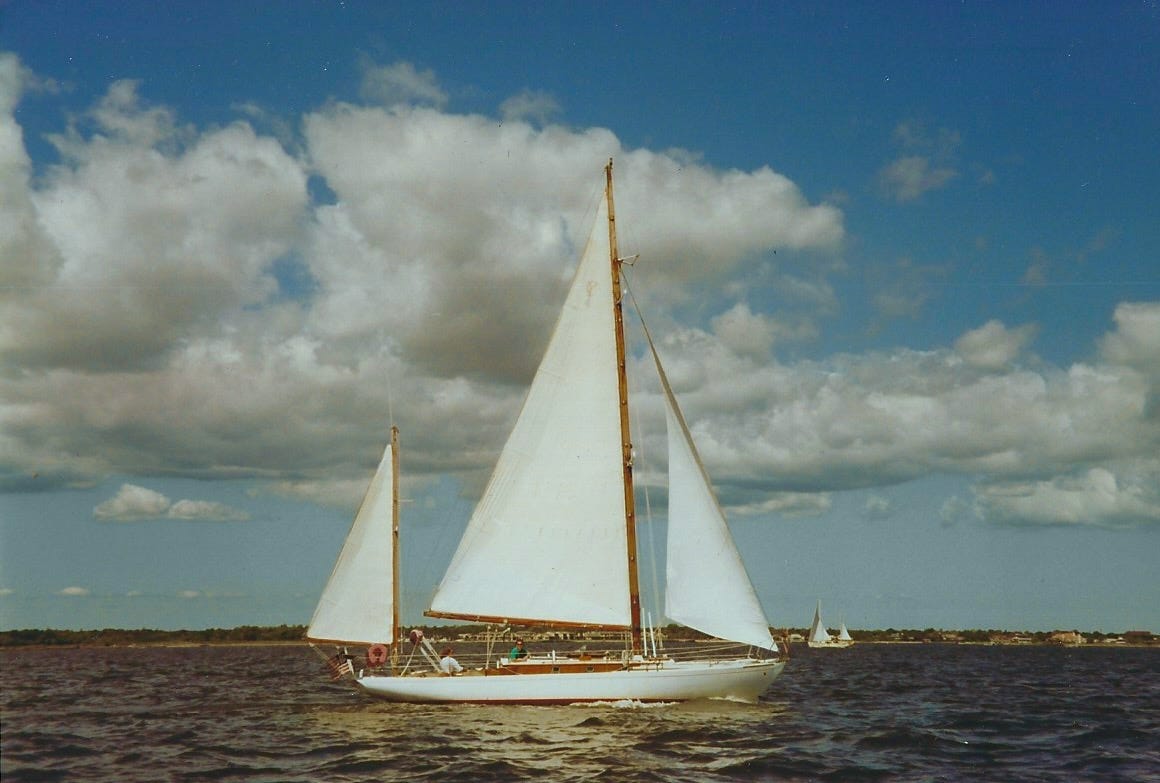
We are back in time, and the young couple are working to get their wooden boat back in the water so they can sail south. Built just after World War II, the vessel is an old girl worth saving. The husband is experienced, the wife a willing but inept apprentice, and together they lack the bottomless bank account needed for hired help, so they’re doing it themselves. It’s taken longer than expected to get this far, and they are both putting in the hours now, evenings and weekends.
They shimmy along the scaffolding he’s built to bring them eye-level with the paint that needs stripping, and the bungs that need filling, and the seams that need stuffing. Long legs working to her advantage, she determines to hop down from her perch without bothering to use the ladder. Pointing her toes toward the ground like a gymnast, she does not anticipate that her butt will leave the platform before her feet make contact, and she finds herself in a brief, ungraceful free fall. She does not stick the landing.
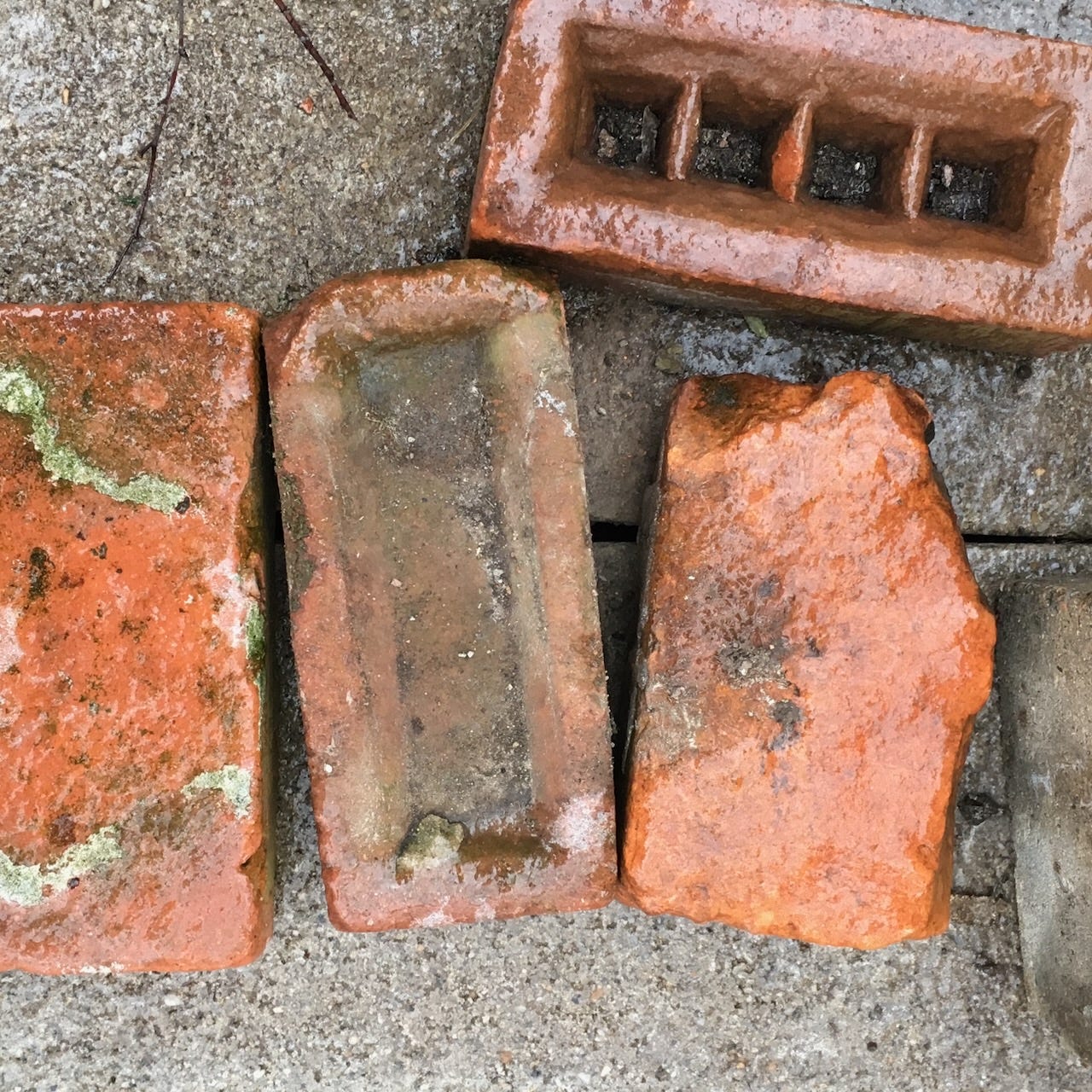
The wife’s now dented shins having found the cinder block she’d been hoping to use as a step stool, she lets out a howl which is met with an unexpected response:
Husband: “Why didn’t you tell me you needed help?!”
Wife, through gritted teeth: “Because…I didn’t know I was going to fall!”
Thirty years and dozens of mishaps later, it is a moment they still laugh about. She sometimes brings it up in social settings to commiserate with another sorry sod who has lost their footing. Such is the case when she hears about a dog who bolts out the door, its owner in hot pursuit until a cement planter gets in the way, sending the owner ass over teakettle.
And so it is that the original scaffolding story resurfaces, with the wife and the husband going over the familiar details again in the bathroom one morning like old folks do, until he says something he hasn’t said in three decades of marriage.
“I felt like it was my fault. I thought I’d thought of everything to keep you safe. But I didn’t think of that.”
The wife finds this touching and also a little insane, protective instincts gone mad. As far as she knows, the husband has no special arrangement with gravity nor does he control her decisions, so really, there is nothing he could have done. But for all these years he’s thought of it as something he failed to prevent.
Probably there’s some biological hardwiring going on here, men as protectors and all that, though the wife can’t help noting how often they break the rules of that assumption. Regardless, protection and prevention aren’t the same.
Protection is designed to manage risk while prevention is the fantasy that risk can be eliminated altogether. And it’s not just men who are misinterpreting.
Another free-range kid kerfuffle has cropped up, this time for a Virginia mom who allowed a five-year-old son to walk alone in a gated community. A concerned citizen called a security guard, who called the police, who called Child Protective Services. Found guilty of contributing to the delinquency of a minor, the Virginia mother says an appeal is forthcoming.
The wife thinks about the time she called the police, convinced her husband was dead in a ditch. Turns out, he was sequestered as a juror and not allowed to use his phone. She notices that protection in the age of mobile devices can look a lot like panic.
Her neighbors have security cameras. Her phone knows the location of everyone in the family, including her, should anyone spontaneously forget where they are. The label on the coffee cup warns of hot contents, the peanut butter of containing nuts, which is, in fact, nuts.
It’s all intended to protect, but we’ve crossed the wires between managing risk and outlawing it. The woman in Virginia was convicted of permitting the possibility that something terrible might happen. Congratulations! The safety pendulum has now swung itself right off the charts. Somebody give that mother a medal for daring to parent at all.
The husband, for what it’s worth, has spent a lifetime fixing things: boats, furniture, real and imagined problems. But wives don’t respond well to sanding or glue, and they’re decidedly not idiot-proof. And nothing in the whole world can make anyone responsible for gravity.
~Elizabeth

So, I guess love doesn’t require a crystal ball 🔮 just someone who’s willing to share responsibilities and scoop you up when you fall.
Where do you draw the line between protecting people you love and letting them make their own mistakes?
Were you a free range child? What about your kids? Grandkids?
Do you know where your people are?
If you stopped in to read today, please let me know by clicking the heart 💚restacking ♻️ or both. If the piece felt meaningful, I’d love to connect with you in the comments. Such a fabulous community there!
Subscribing means future essays—some light, some not—can land in your inbox so you don’t miss them.
My gratitude for those of you who choose to support this work with paid subscriptions. It’s not a requirement, which makes the contribution that much more meaningful. And, for those who can’t handle one more subscription, there’s a tip option as well. Thanks for doing what you can when you can. Every dollar truly helps offset the hours I invest to bringing these ideas to the page week after week.
Afterward:
Each week I close with something specific to try, because insight without action is just a nice thought. This week’s is a quiet one, just a question to consider.
Try this:
Ask yourself if there’s something you feel responsible for that was never yours to hold, or prevent. You might be surprised by what you’re carrying.
See you soon!
You stuck the landing, in more ways than one.
I feel for that mother in Virginia. My urban kid, born in 1971, would hop on his bike and disappear for hours (no helmet). I wouldn’t be so offhand today, but he survived without a scrape.